Innovation Center — Dakar, Senegal

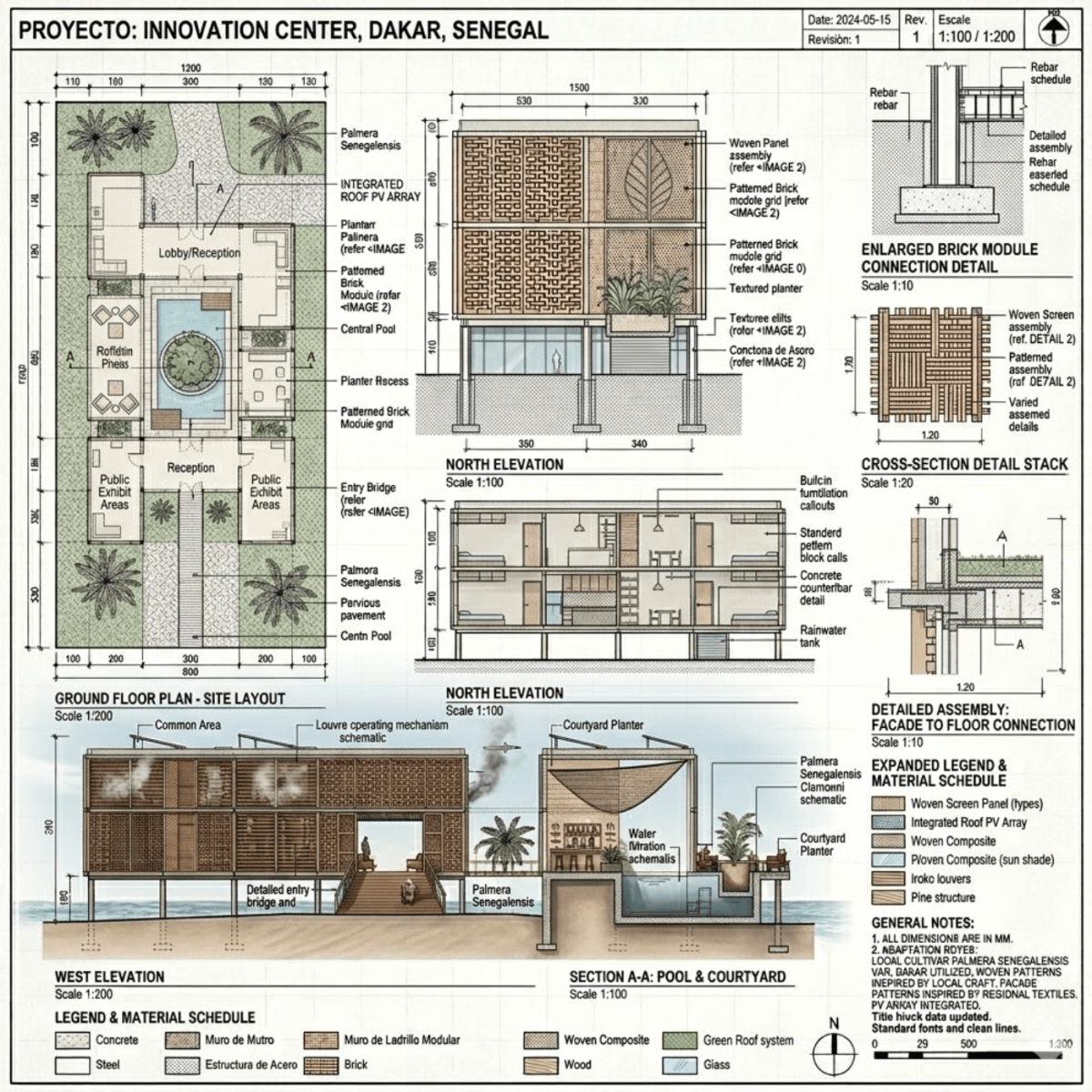
A contemporary innovation center in Dakar, Senegal, where a patterned brick facade and a central reflecting pool create an institution designed as much for inspiration as for work.

The Innovation Center in Dakar, Senegal is built on the conviction that the physical environment shapes the quality of the ideas produced within it. The design brings together research, collaboration, and public engagement in a building that is open, generous, and rooted in its West African context.

The ground floor layout is organised around a central reflecting pool and courtyard — a calm, contemplative space that gives every part of the building a view of water and sky. Around this core, the plan unfolds into a lobby and reception area, meeting rooms, office and lab spaces, and flexible common areas suited to the varied rhythms of innovation work. The relationship between indoor and outdoor is seamless throughout, with covered walkways and shaded thresholds ensuring the courtyard is usable across all seasons.

The facade uses an enlarged brick module in a patterned arrangement that references local craft traditions while performing a genuine environmental function — filtering direct sunlight, encouraging cross-ventilation, and giving the building a texture that changes through the day as the light moves across it. This is a building that invests in its setting and expects its setting to invest back.

Architectural Renders
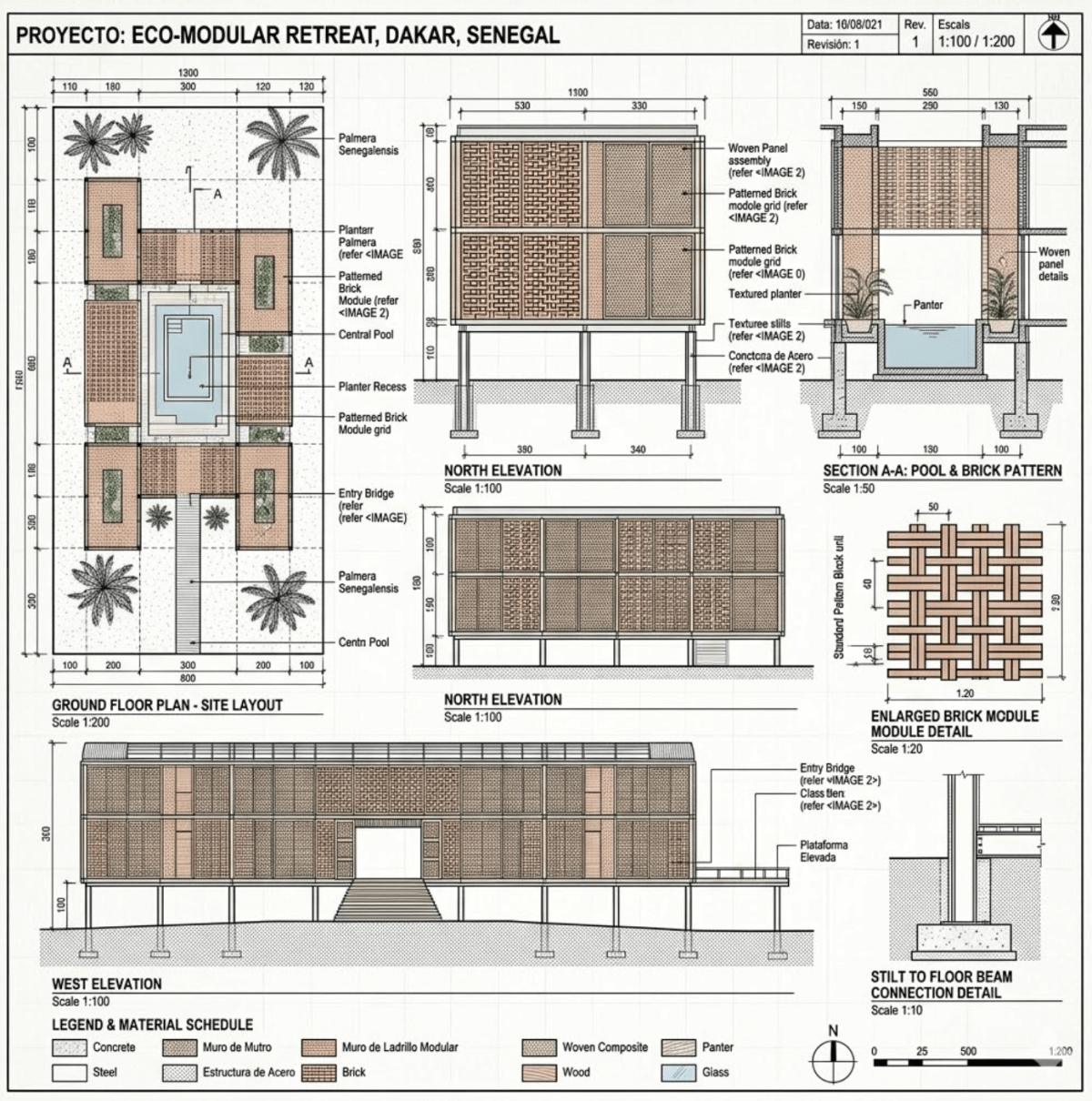
Eco-Modular Retreat — Dakar, Senegal

A modular eco-retreat in Dakar, Senegal, where patterned brick facades and palm-lined courtyards create a series of private units that feel both contemporary and deeply rooted in their West African context.

The Eco-Modular Retreat in Dakar, Senegal is designed around a deceptively simple idea: that a retreat should feel like a community, not a compound. Multiple modular units are arranged around a shared central courtyard that contains a pool, mature palm plantings, and integrated rock fill areas — creating a landscaped heart to the development that every unit relates to and benefits from.

Each unit’s facade uses a patterned brick module that references traditional West African screens and lattice work, allowing light and air to move through while maintaining visual privacy. The brick pattern is not merely decorative — it is structural and functional, calibrated at the module level to achieve the right balance of openness and enclosure. Wood composite panels appear at deck surfaces, doors, and louvered elements, adding warmth to what might otherwise be a purely masonry composition.

The west elevation reads as a long, layered horizontal — a series of slightly staggered bays unified by a consistent roofline. A section through the pool and courtyard reveals the relationship between the units and the shared outdoor space, showing how the buildings frame, shelter, and overlook the communal area without dominating it.

Architectural Renders