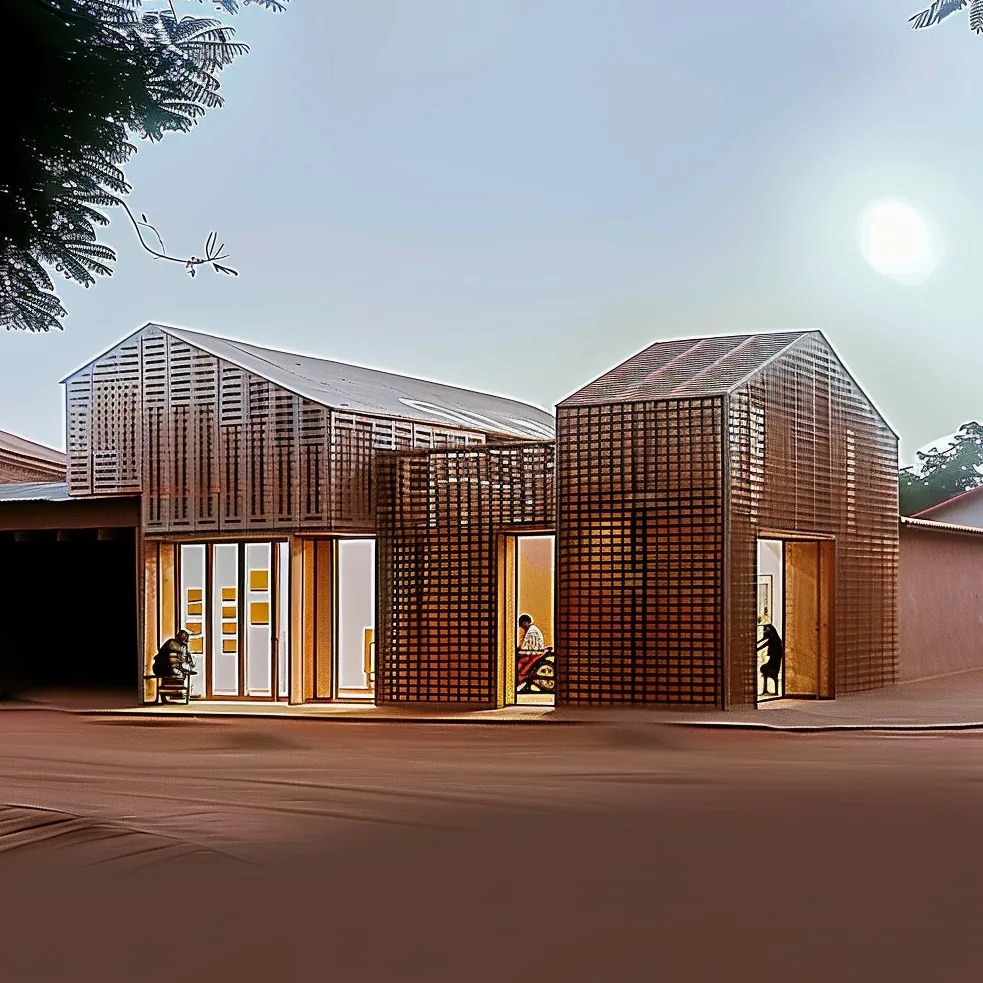
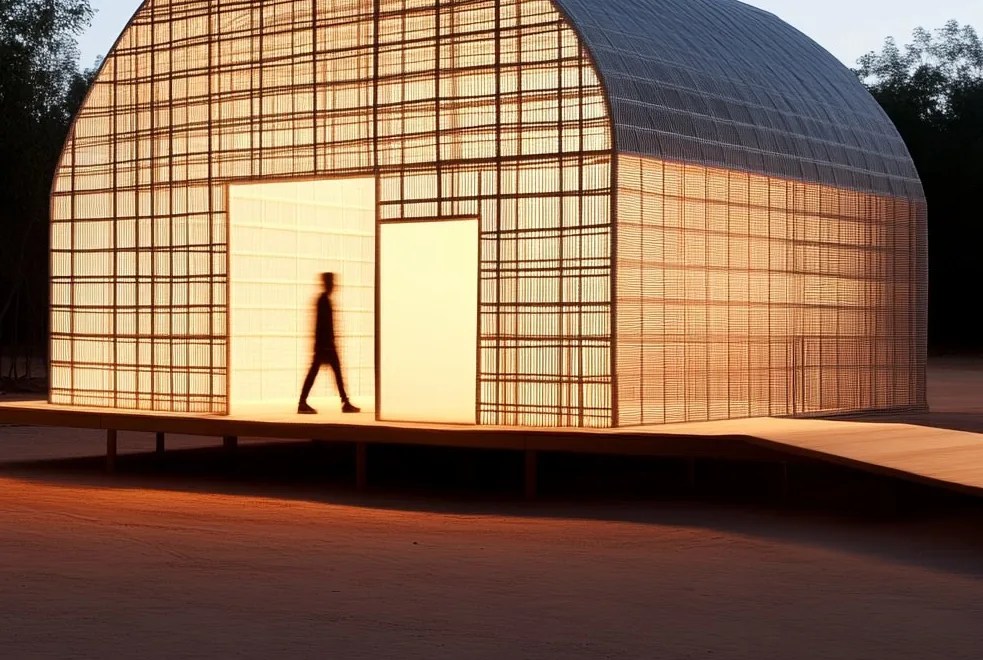
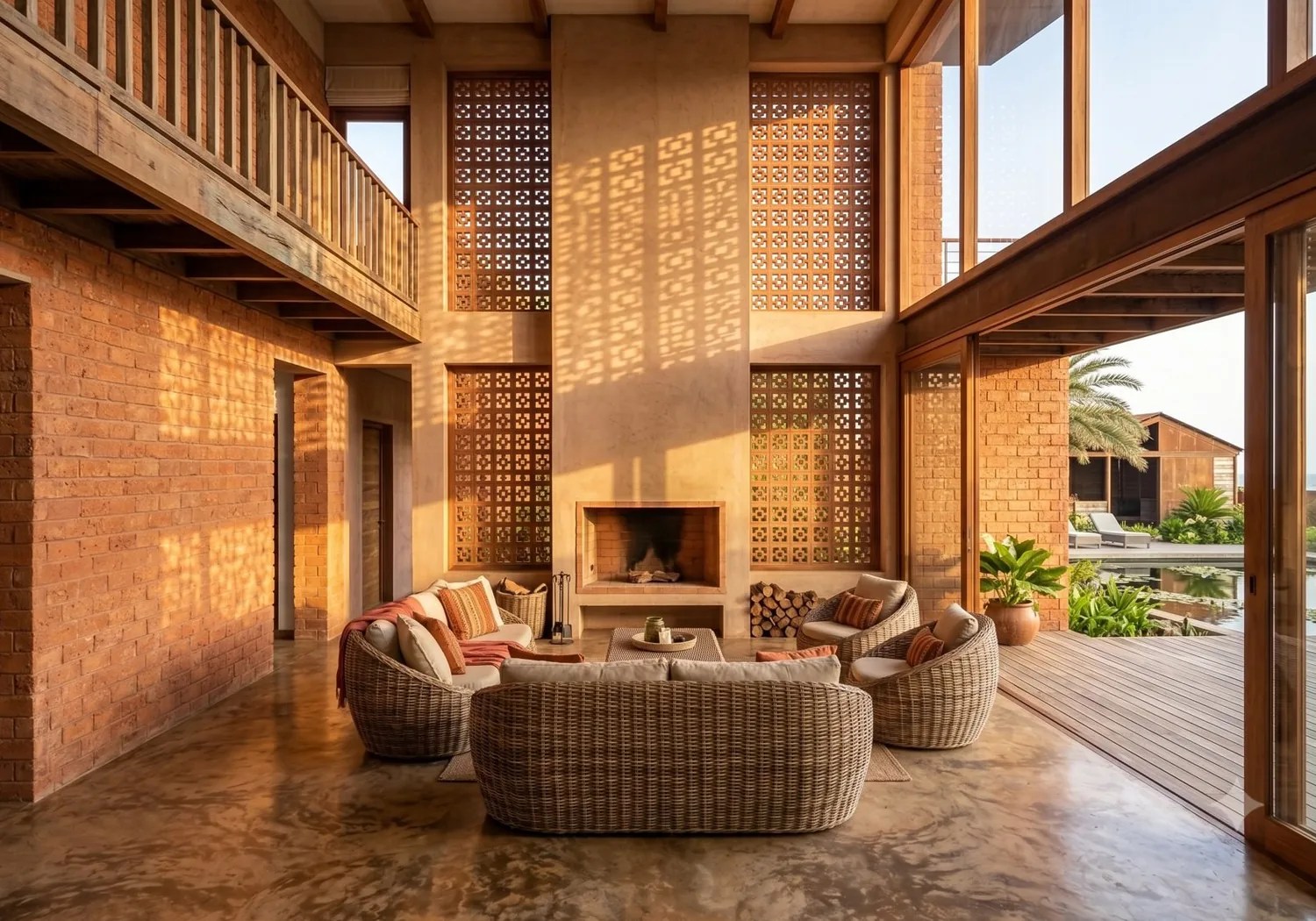
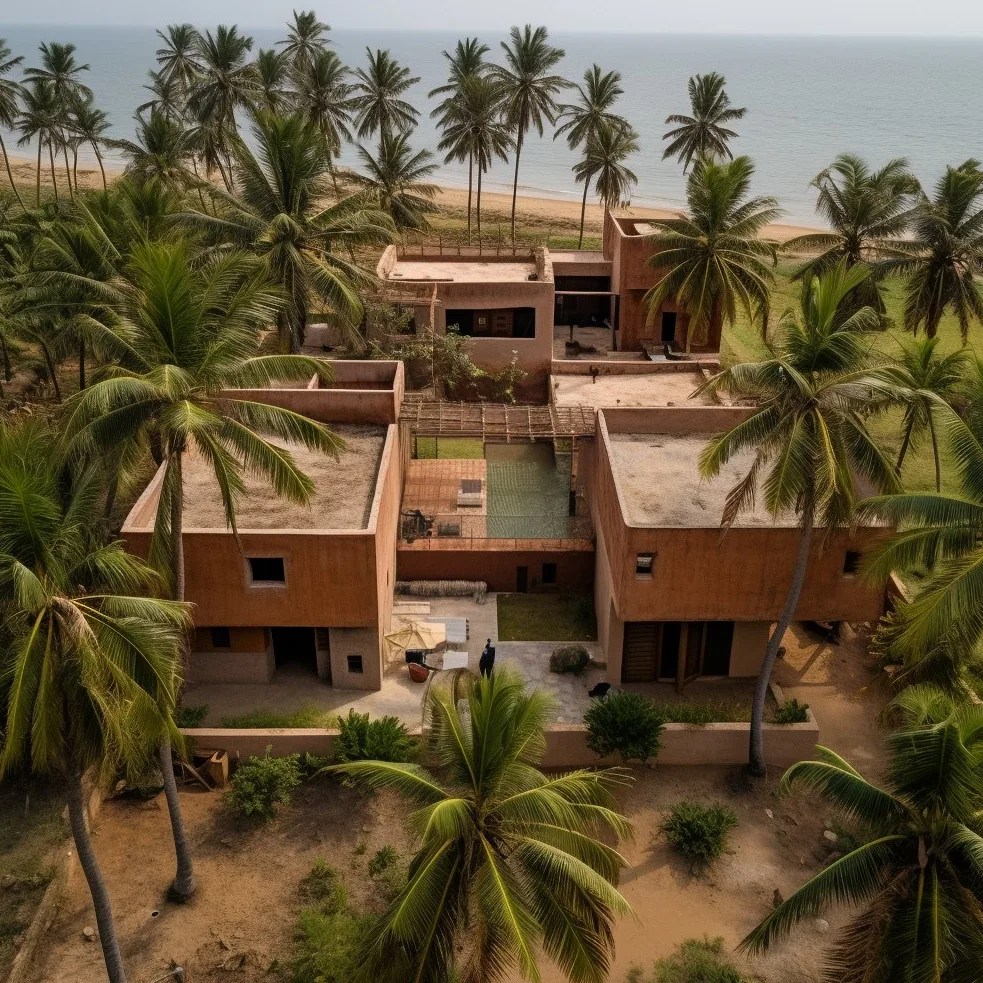
Modern Building by Wilkin Architecture — Western Pennsylvania

A contemporary institutional and commercial building study set in Western Pennsylvania — exploring how modern architecture engages the industrial heritage, rolling landscape, and building culture of the Pittsburgh region.

Modern Architecture in the Pittsburgh Region

Western Pennsylvania carries one of the most layered architectural histories in North America — from the industrial vernacular of steel towns and river valleys to the civic ambitions of Carnegie-era Pittsburgh, and from mid-century modernism to the contemporary adaptive reuse that has remade the city over the past three decades. Building here means engaging that history, whether you choose to acknowledge it explicitly or not.

This building study, developed in the spirit of the work produced by Wilkin Architecture — a Pittsburgh-based practice known for its thoughtful engagement with place and program — explores what contemporary institutional and commercial architecture might look like when it takes the specificity of Western Pennsylvania seriously: its topography, its material traditions, its industrial memory, and the scale of its towns and neighbourhoods.

Steel, Glass, and the River Valley

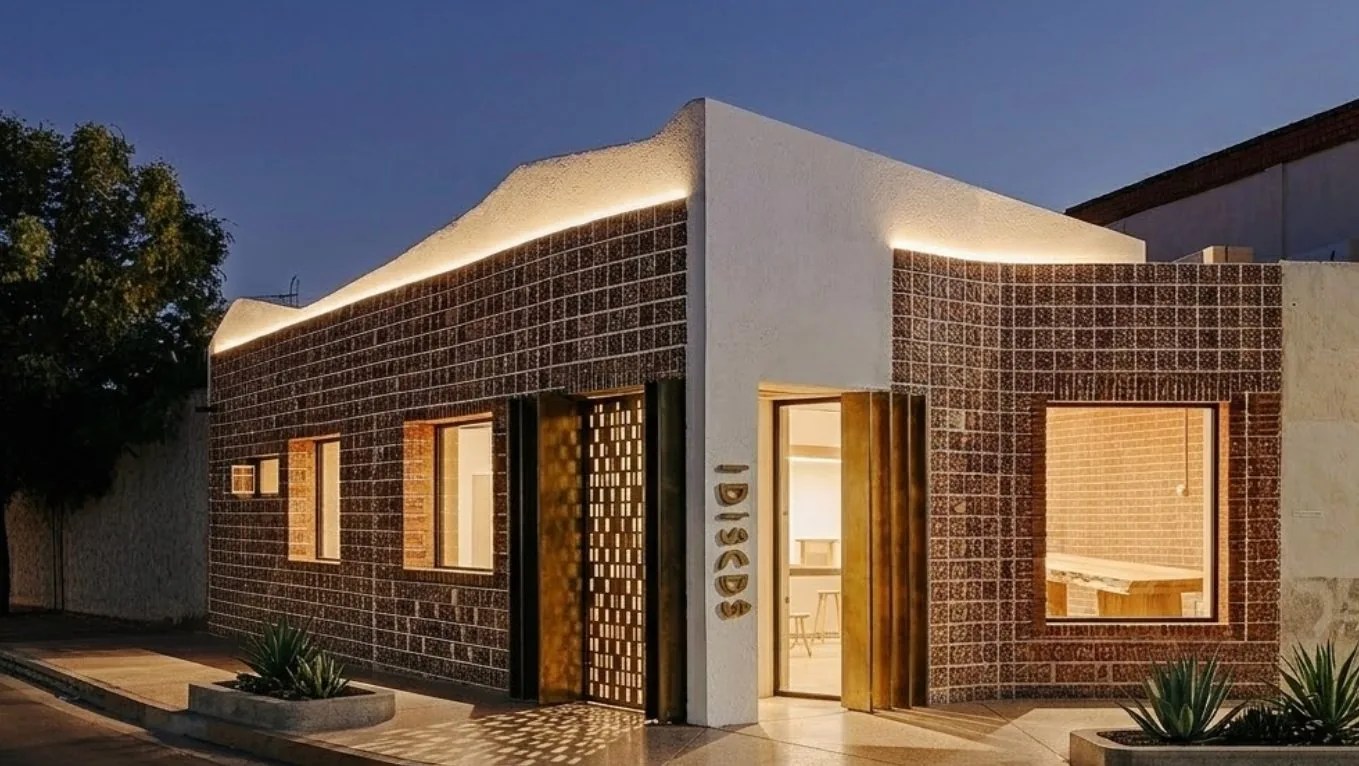
The palette of Western Pennsylvania architecture is dominated by steel and masonry — materials that the region produced in abundance and that its buildings consumed in equal measure. Contemporary architecture here tends to engage those materials with awareness: using weathering steel that references the industrial heritage, brick that ties new buildings to the older fabric, and glass that responds to the region’s famously variable light.

These AI renders explore the architectural possibilities of a building type — the mid-scale institutional or commercial block — that defines the character of Western Pennsylvania’s smaller cities and towns. They are a tribute to the craft of contextual modern architecture in a region that has earned its own architectural identity.

Acadian Forest Cabin — Nova Scotia

A small cabin set within the Acadian forest of Nova Scotia — designed to sit lightly on the land, shelter its occupants through Atlantic winters, and disappear into the treeline.

Dwelling in the Acadian Forest

The Acadian forest is one of the most ecologically diverse temperate forest regions in North America — a complex mix of red spruce, balsam fir, sugar maple, yellow birch, and eastern hemlock that stretches across Nova Scotia and the broader Maritime region. Building within it demands restraint: the forest asserts itself, and architecture that fights that assertion usually loses.

This cabin design embraces smallness as a virtue. The footprint is minimal — enough to shelter, sleep, cook, and gather, but not so large as to require significant forest clearing or heavy mechanical systems. Post-and-beam construction allows the structure to step over roots and rocks rather than requiring a flat cleared pad. Dark-stained timber cladding recedes into the treeline rather than announcing itself.

Four Seasons, One Form

Nova Scotia’s climate tests a building in all four seasons: humid summers, spectacular autumns, cold and wet winters, and springs that arrive late and leave fast. The cabin is designed to be inhabited year-round, with a well-insulated envelope, a woodstove as the thermal anchor of the plan, and a south-facing window wall that captures the low winter sun while a deep roof overhang shades the interior in summer.

The veranda — covered, sheltered from the prevailing wind — extends the livable space in the shoulder seasons: a place to watch the forest, process firewood, or simply exist at the edge between inside and outside. It is the most important room in the cabin, even though it has no walls.

This design is grounded in the Acadian Forest’s particular character — its density, its dampness, its wildlife, and its silence. Architecture here should be a guest, not a statement.

Saltbox House — Southwest Nova Scotia

A saltbox house study rooted in the vernacular traditions of Southwest Nova Scotia — where the asymmetric roofline, cedar shingles, and weathered timber speak a language shaped by Atlantic climate and Maritime craft.

The Saltbox and the Shore

The saltbox is one of the most distinctive vernacular house forms of Maritime Canada — its characteristic asymmetric silhouette, with a long rear roofline sweeping low over a rear lean-to addition, is a product of incremental building practice rather than formal design. The original gable-roofed house simply grew, and the addition was tucked under an extension of the main roof rather than given its own ridge. The result is a form of quiet genius: economical, weather-resistant, and immediately recognizable.

In Southwest Nova Scotia, the saltbox sits in a particular landscape — spruce and fir windbreaks, rocky headlands, grey Atlantic skies, and the smell of low tide. The architecture has adapted to this place over three centuries: tight windows on the weather side, generous south-facing glazing, cedar shingles that silver in the salt air, and a stoic simplicity that feels neither austere nor unfriendly.

A Contemporary Reading

This design study asks what a contemporary saltbox might look like — one that inherits the form’s climatic intelligence and material honesty while accommodating the programmatic expectations of a modern home. The answer lies not in replication but in translation: the same asymmetric silhouette, the same material palette, the same relationship to the land, but with updated proportions, contemporary insulation standards, and spatial generosity where the vernacular was sometimes cramped.

Southwest Nova Scotia continues to attract people seeking a slower relationship with the natural world, and the saltbox — reimagined — remains a compelling archetype for that life: grounded in place, shaped by weather, and built to last.

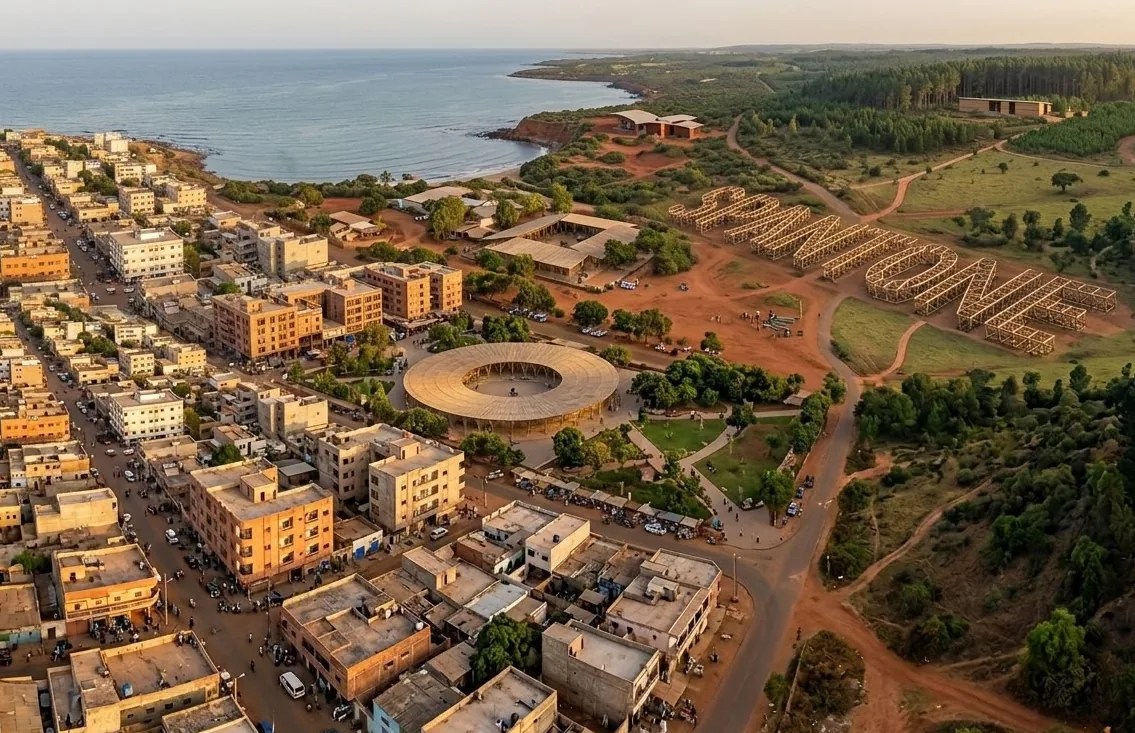
Capitol City — Architectural Vision

A speculative architectural vision for civic and institutional buildings in a capitol city context — exploring monumentality, public space, and the symbolic weight of government architecture.

Architecture of the Civic

Capitol city architecture carries a particular burden: it must represent the state to its citizens and to the world, embody ideals of governance and public life, and endure across political cycles that may transform everything else around it. These are demanding requirements, and they have historically produced both the best and the worst of institutional architecture.

This speculative vision explores what a contemporary African capitol city’s civic architecture might aspire to — neither the colonial inheritance of imposed classical styles, nor the imported glass towers of global corporate development, but something rooted in place and climate while projecting confidence and permanence.

Monumentality Without Grandiosity

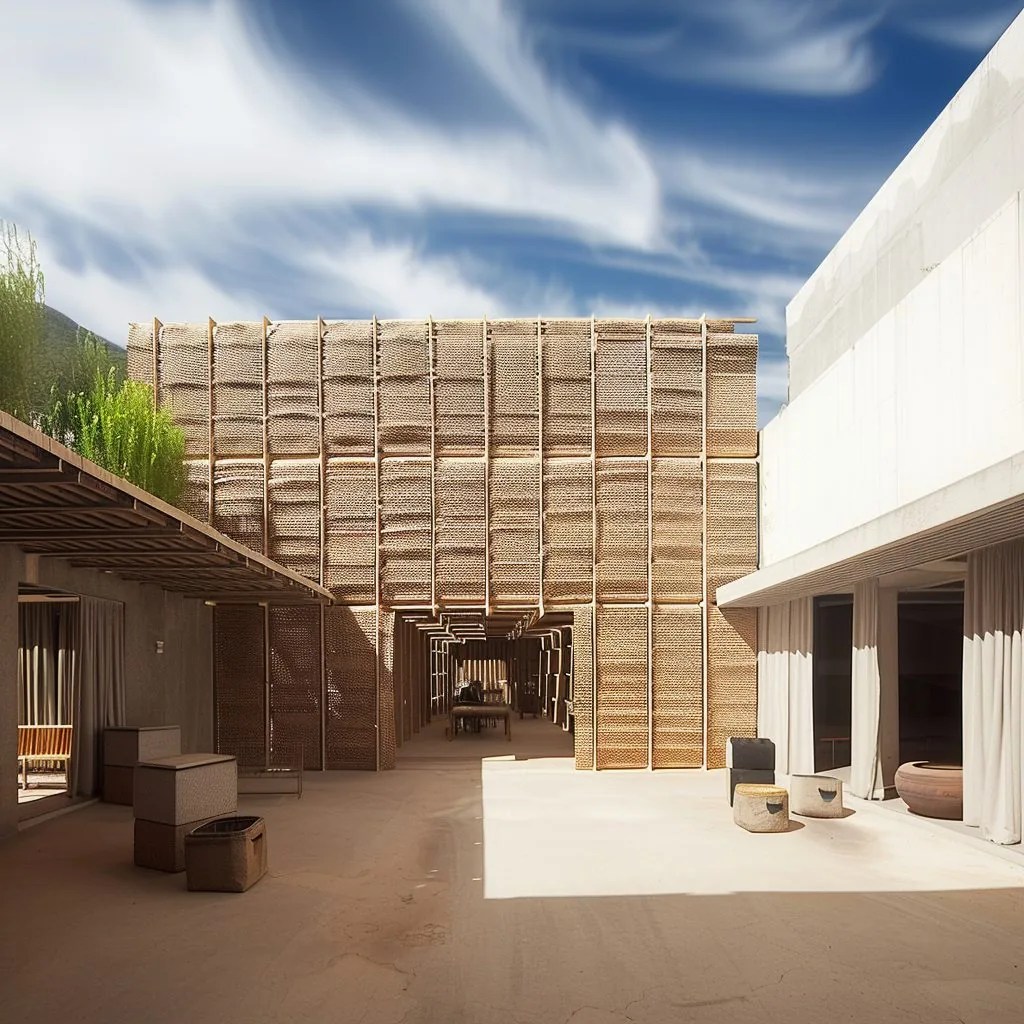
The challenge for civic architecture in the twenty-first century is to achieve presence and civic dignity without resorting to the bombast of monuments that serve power rather than people. Scale, material, proportion, and the quality of public space around buildings matter as much as the buildings themselves. These renders explore how those relationships might be resolved in a contemporary African context — where the street, the plaza, and the shade tree are as important as the façade.

These AI renders are a provocation and a proposition — imagining public buildings that serve as armatures for civic life rather than symbols of institutional authority alone.

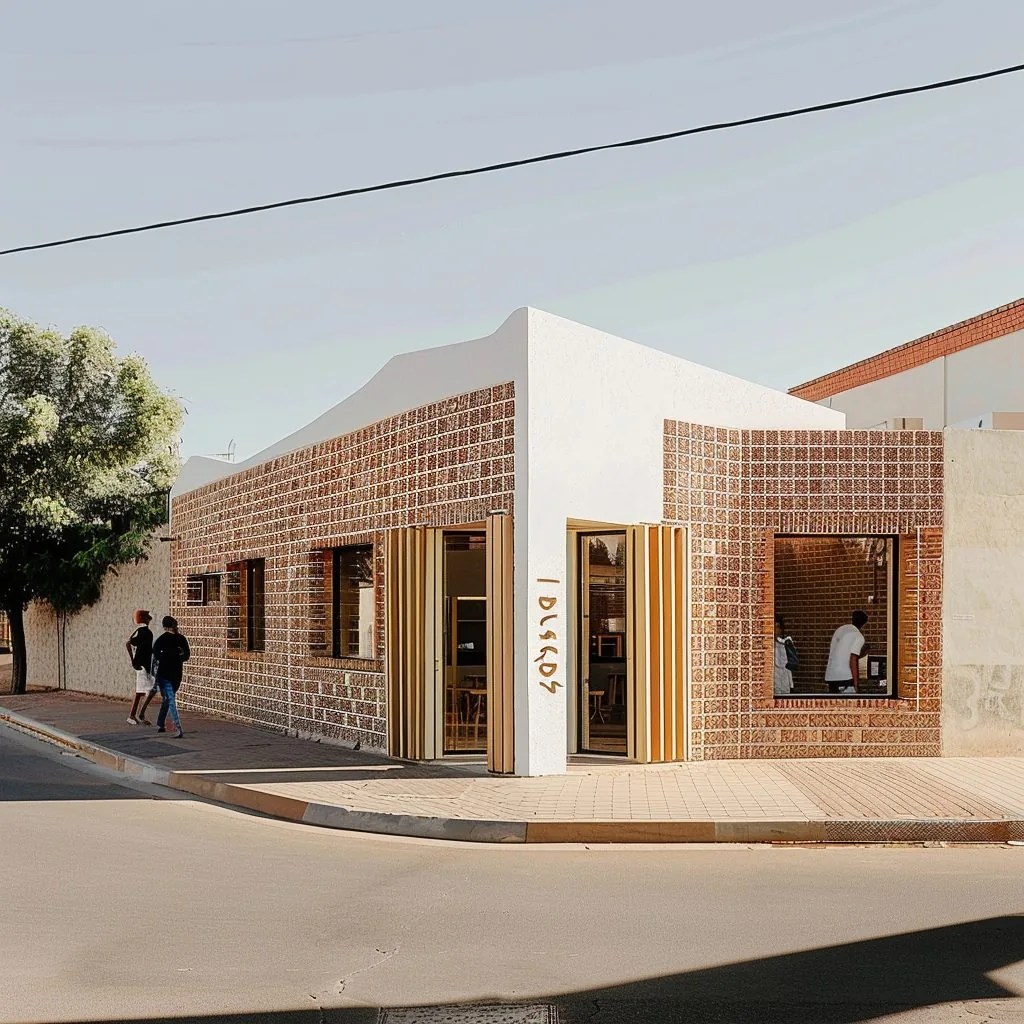
Modern Brick Two-Story House — Bafang, Cameroon

A two-story brick residence for a mid-altitude Cameroonian town — where the cool highland climate, rich red soils, and a growing middle class converge in a new domestic typology.

Highland Brick in Bafang

Bafang sits in the highlands of western Cameroon — cooler than the coast, more temperate than the Sahel, and surrounded by the red laterite soils that have been the raw material for vernacular construction across Central Africa for generations. This two-story brick house study draws on that material tradition while proposing a contemporary spatial organization suited to the aspirations and lifestyle patterns of a modern Cameroonian family.

The two-story section is economical: it doubles the accommodation without doubling the footprint, preserving garden space and reducing site coverage on the typically modest urban plots of Cameroonian towns. A covered veranda at ground level extends the living area into the outdoor space, mediating between the interior and the street in a way that is culturally familiar and climatically appropriate.

Brick as Identity

Brick in this context is not merely a construction material — it is a statement of permanence and investment. The detailing of the façade — the proportions of openings, the treatment of the parapet, the choice of bond — become the primary expressive tools, transforming what could be a generic box into a building with character and presence in its neighbourhood.

These AI renders explore the residential architecture of Cameroon’s highland towns — grounding the design in local climate, materials, and social patterns while reaching toward a contemporary expression of home.

12×30 Curved House Plan

A compact 12×30 footprint with a curved plan — exploring how a gentle arc can dissolve the rigidity of the rectangular lot and create fluid interior circulation.

The Curve Within the Rectangle

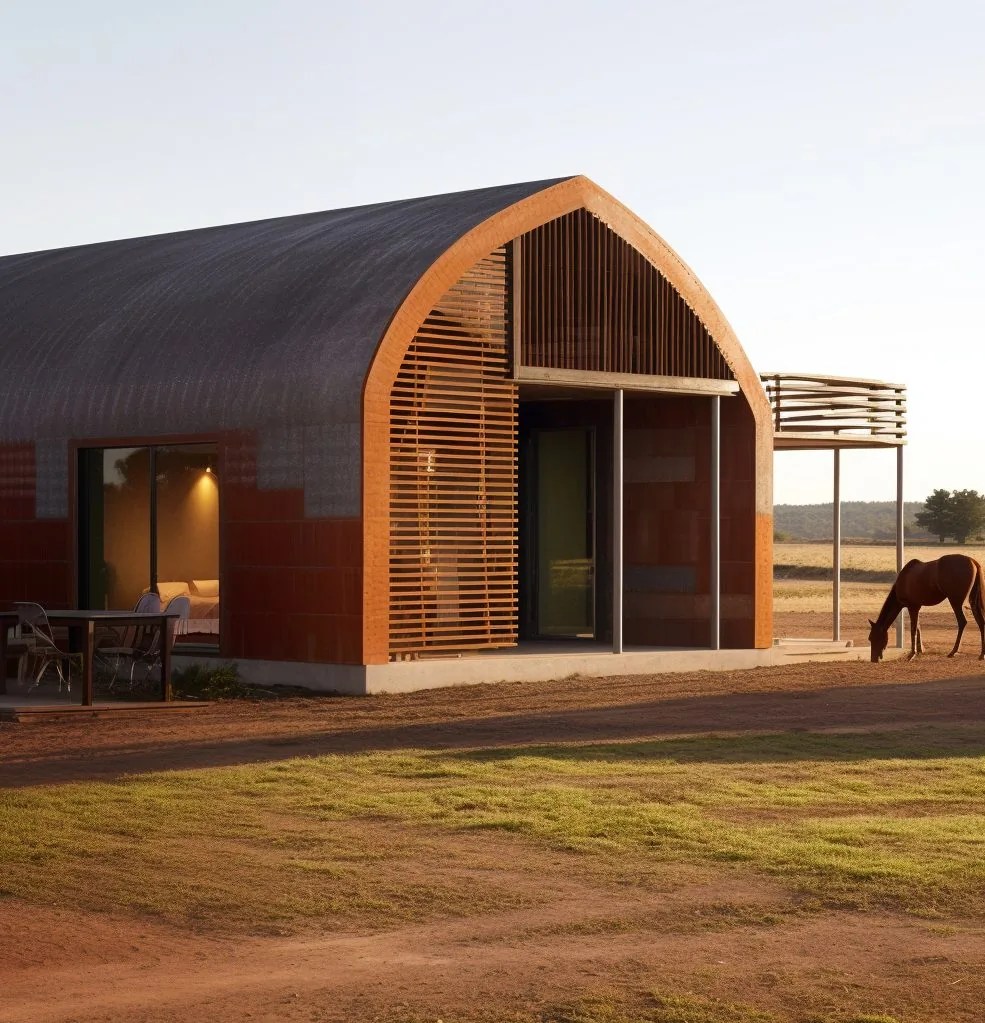
The 12×30 metre footprint is a common constraint in urban and peri-urban residential design — a narrow lot that forces efficiency and demands that every square metre earn its place. This study introduces a curved plan geometry within that envelope, asking what happens when the organizing logic of the house is not the right angle but the arc.

The curve does several things simultaneously: it creates a dynamic façade that catches light differently across its surface, it generates interior rooms of varying widths that resist the cellular monotony of the rectangular plan, and it introduces a sense of movement — a sweeping gesture that draws the eye and the body through space.

Compact and Considered

At 12 metres wide, the plan remains buildable on a standard urban lot without requiring a corner site or unusual setback arrangements. The curved wall is expressed on the street-facing façade, giving the house a distinctive presence on the block while the rear elevation remains orthogonal for ease of construction and utility access.

These AI renders explore the visual and spatial character of the curved compact house — a study in how a simple geometric deviation from the norm can produce architecture of genuine distinction within ordinary constraints.

Nighttime Dakar — Design Brandscape

Dakar at night rendered through an architectural lens — exploring how light, shadow, and the city’s visual identity converge into a nocturnal brandscape.

The City After Dark

Dakar transforms at night. The harsh equatorial sun that flattens surfaces and bleaches colour during the day gives way to a rich nocturnal atmosphere — warm artificial light carving volumes out of darkness, the Atlantic horizon dissolving into blackness, and the city’s social life spilling onto streets and terraces in a way that daylight hours rarely allow.

This series of AI renders explores Dakar’s nighttime architectural character — what might be called its Design Brandscape. The term refers to the visual and spatial identity that a city projects through its built environment: the palette of its lights, the silhouettes of its buildings against the sky, the texture of its public realm when illuminated from below.

Light as Architecture

In tropical cities, architectural lighting carries particular weight — it extends usable hours outdoors, creates thermal gradients that drive natural ventilation, and defines the social geography of the street. These renders investigate how deliberate lighting design can reinforce a building’s character after sundown: emphasizing texture, directing movement, and signalling welcome.

These renders are speculative — architectural visions of what a consciously designed nocturnal identity for Dakar might look like. They are an invitation to think about the city not just as a daytime organism, but as a twenty-four-hour experience shaped by light, warmth, and the particular energy of West African urban life after dark.

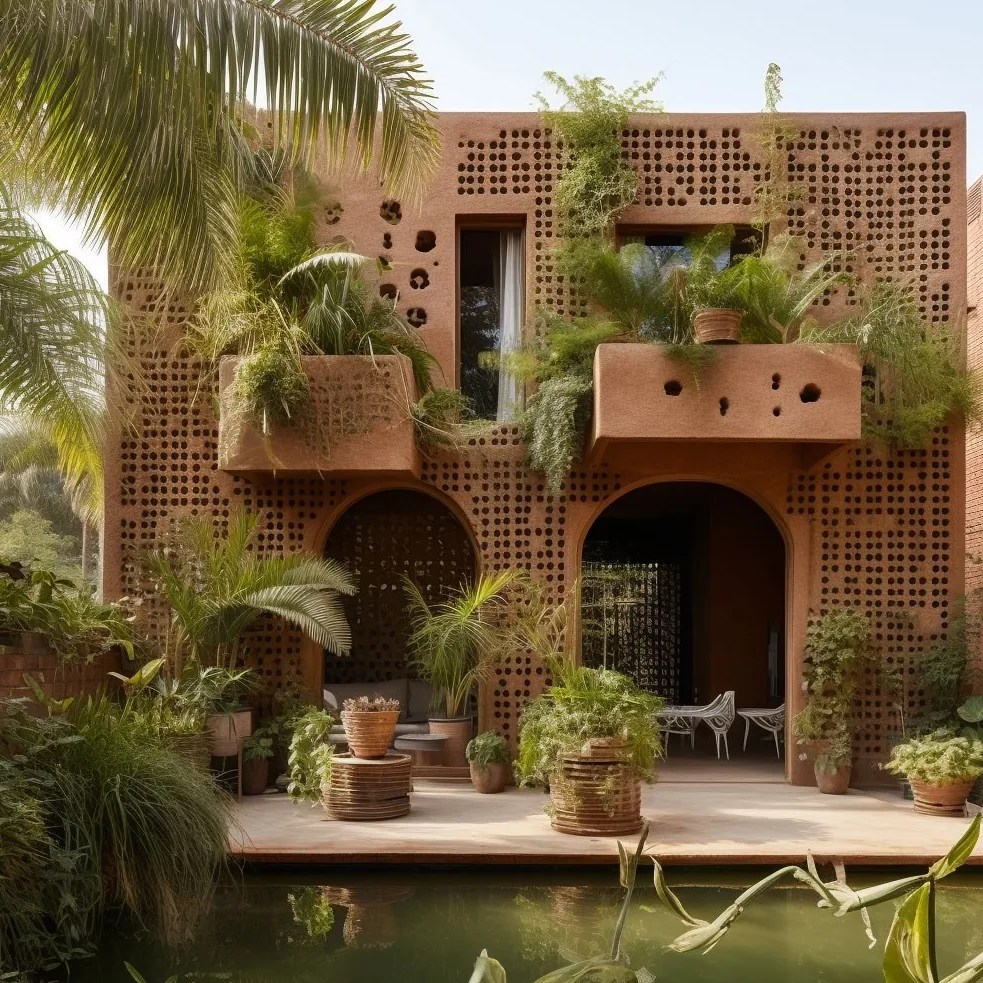
Senegalese House — Water Details & Brick Façade

A deep dive into the material and atmospheric qualities of the Senegalese house typology — exploring water features, brick coursing, and the sensory language of West African domestic architecture.

Water, Brick, and the Senegalese House

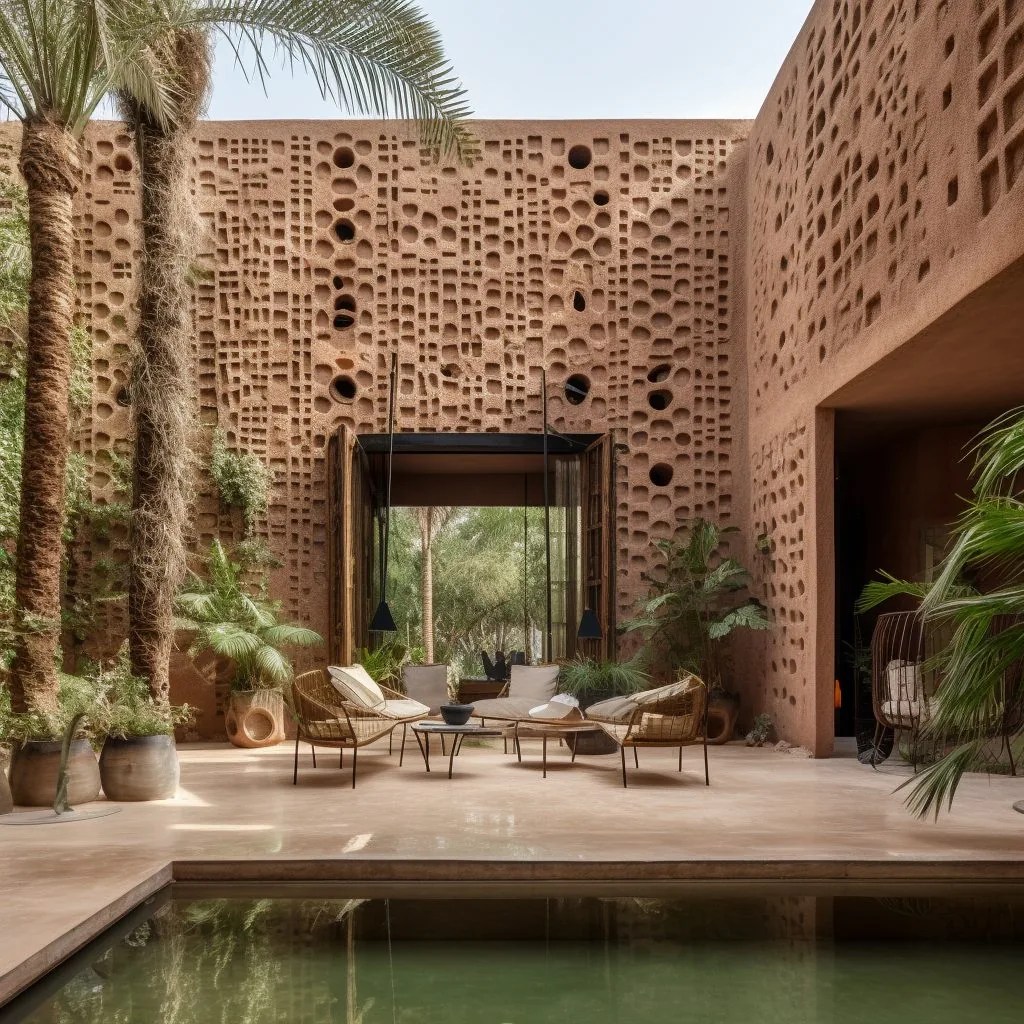
In the Senegalese residential tradition, water is more than utility — it is atmosphere. Courtyard fountains, reflecting pools, and channel features cool the air through evaporation, soften sound, and provide a focal point for domestic gathering. This series of AI renders investigates how water elements can be integrated into a contemporary Senegalese house without losing their poetic function.

Brick is the primary material protagonist here — hand-laid, sun-dried, or fired depending on regional availability. The coursing patterns speak to craft traditions that predate industrialization: herringbone, soldier course, and running bond each carry different visual rhythms that animate the facade across changing light conditions.

Atmospheric Architecture

The renders in this series focus on moments rather than floor plans — the play of shadow on a brick wall at midday, the reflection of sky in a still courtyard pool, the texture of a rendered arch worn smooth by years of hands. These are the sensory qualities that make a house a home, and they inform the spatial decisions made at every scale.

This collection represents an ongoing material investigation — using AI rendering as a tool for exploring the atmospheric and haptic qualities of architecture before any line is drawn on a construction document.

L-Shaped House on a Southern Slope

An L-shaped residential design shaped by topography — the plan wraps the slope, opening the living spaces to southern light while anchoring the form to the land.

Following the Contour

The L-shaped plan is one of architecture’s oldest tools for managing a sloped site — it allows one wing to run with the contour while the other steps down or up, creating split-level possibilities without departing from a simple organizational logic. On a south-facing slope, the form becomes a solar instrument: the longer arm collects winter sun deep into the plan, while the shorter arm provides shade and frames outdoor space in a protected courtyard pocket.

This design study positions the living, dining, and kitchen spaces along the southern-facing wing, maximizing passive solar gain and long views down the slope. The private bedroom wing steps back, gaining privacy while remaining thermally sheltered by the living volumes.

Courtyard as Climate Buffer

The elbow of the L creates an interior courtyard — sheltered from prevailing winds, sunlit through much of the day, and immediately accessible from both wings. This threshold between inside and outside becomes the social heart of the home: a place for outdoor dining, a garden, or simply a moment of stillness framed by the building on two sides and open sky above.

These AI renders explore the interplay of built form and terrain — where the discipline of the L-plan gives the house its character, and the slope gives it its reason for being.

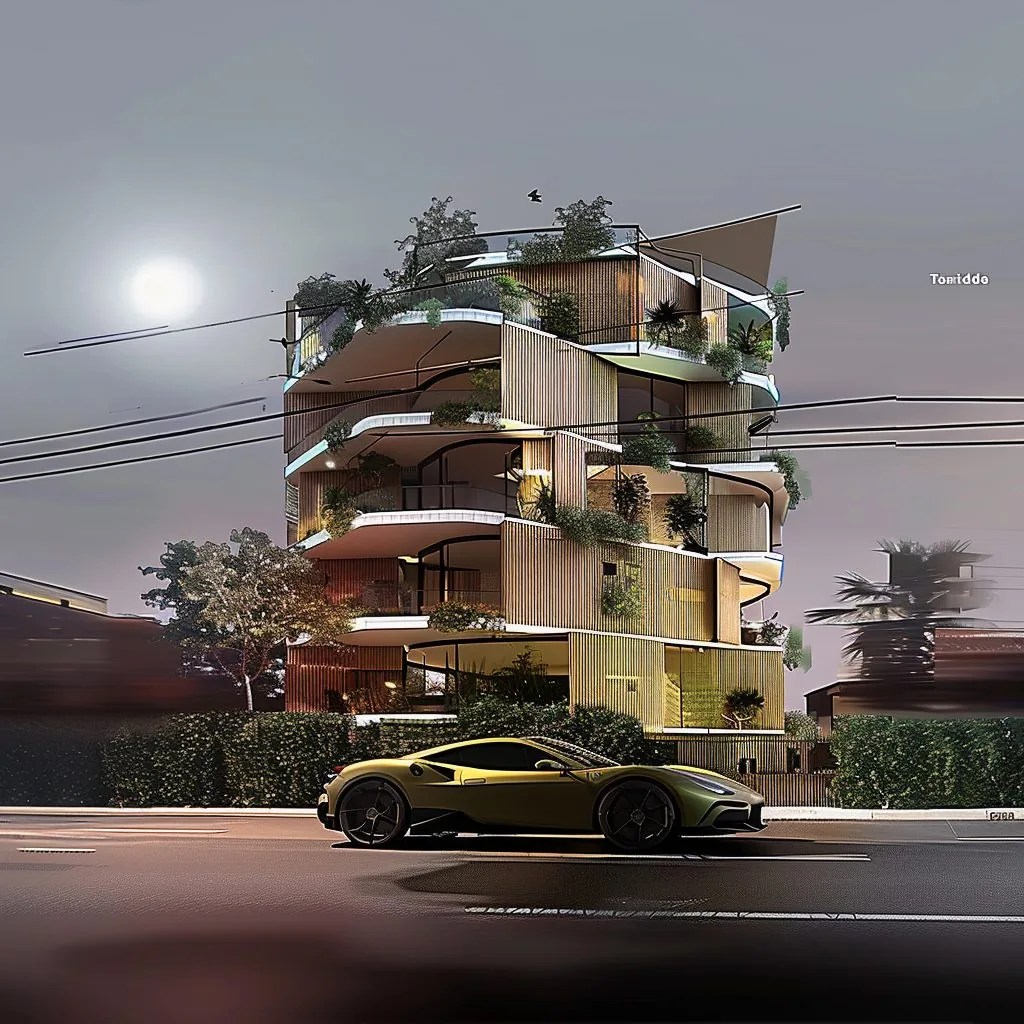
Regional Criticalism — Apartment Block

A speculative apartment block design exploring Regional Criticalism — where contemporary massing meets vernacular material logic, local climate response, and contextual streetscape.

Apartment Block Through a Regional Lens

Regional Criticalism is an architectural stance that refuses the universal — insisting instead that buildings must respond to the particularities of place, climate, craft, and culture. This apartment block study explores what multi-unit housing might look like when shaped by those pressures: local materials, solar orientation, breeze paths, and the rhythm of the street.

The massing is deliberate and economical, avoiding the pastiche of nostalgia while remaining legible within its setting. Balconies are treated as functional climatic devices — shading lower floors, catching prevailing winds, and creating semi-private outdoor thresholds that extend domestic life beyond the unit envelope.

Material Strategy

Brick, concrete, and timber are drawn into conversation — each carrying its own regional memory. The façade is organized to read as a collection of inhabited surfaces rather than a singular curtain wall, giving each floor and unit a legible presence on the street.

These AI renders explore the architectural vocabulary of Regional Criticalism applied at the scale of multi-unit housing — asking how collective living can remain culturally rooted while embracing contemporary construction and spatial generosity.