Reconfigured Wardrobe Unit — Open Closet System

A considered open wardrobe unit combining a slatted wood panel, hanging rail, and open shelf cube — designed to bring a little more organisation and a lot more character to the bedroom.

Not every design challenge involves a whole building. Sometimes the most useful design is one that solves a specific everyday problem with care and intelligence — and that’s exactly what this reconfigured wardrobe unit does. Produced by Filedesign, the open closet system pairs a tall slatted wood panel with a steel hanging rail and a grounded open shelf cube, creating a freestanding wardrobe solution that works as hard as a built-in while remaining entirely moveable.

The slatted panel is the centrepiece: vertical timber strips spaced at consistent intervals give the unit a rhythm and warmth, providing a visual backdrop for displayed clothing and objects while allowing a little air movement behind hung garments. A steel rail extends horizontally from the top of the panel, offering generous hanging capacity rated to 40 items. Below the hanging zone, an open cube provides a natural home for folded items, shoes, or baskets.

The unit stands on slim metal legs that lift it clear of the floor, keeping the visual weight light and making it easy to clean beneath. Blueprint documentation details the extended hanging rod configuration, connection joinery at each joint, and dimensional tolerances — a product designed with the same rigour as the buildings it furnishes.

Innovation Center — Dakar, Senegal

A contemporary innovation center in Dakar, Senegal, where a patterned brick facade and a central reflecting pool create an institution designed as much for inspiration as for work.

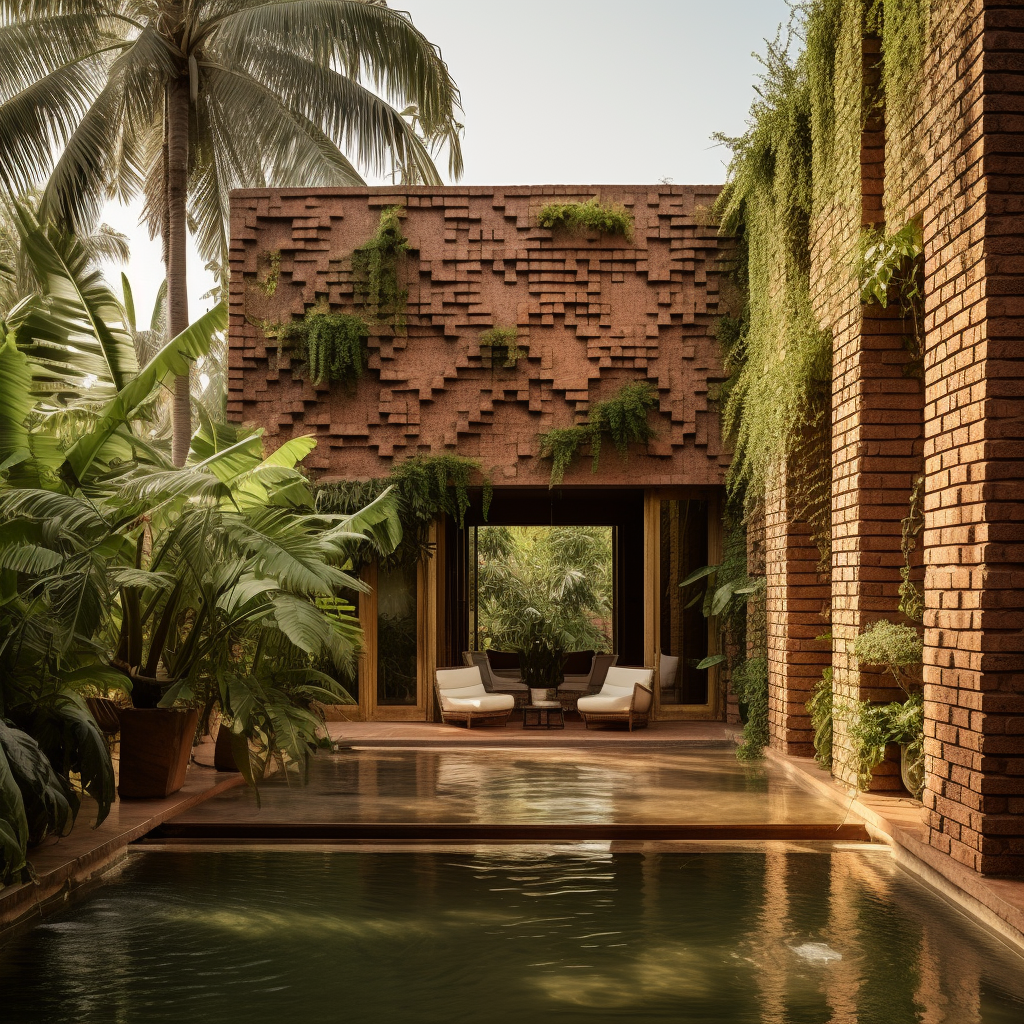
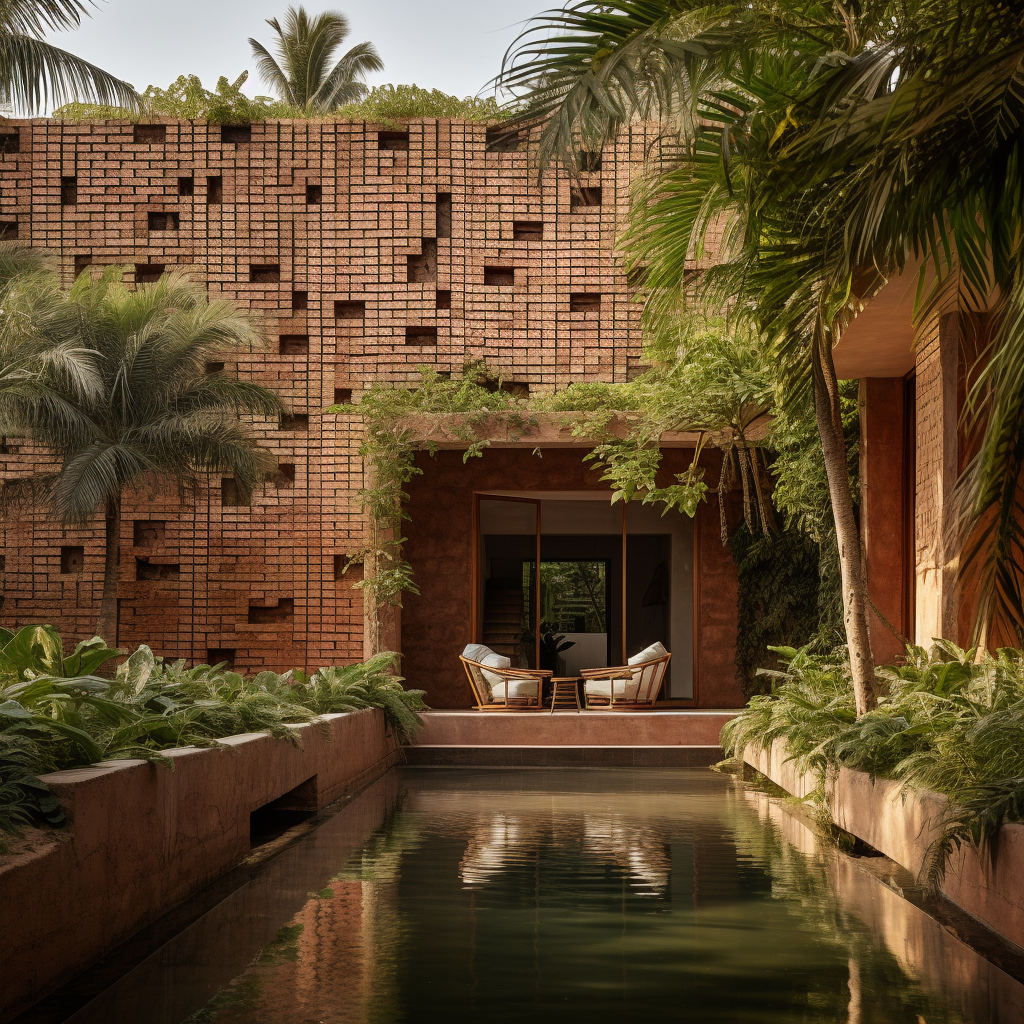
The Innovation Center in Dakar, Senegal is built on the conviction that the physical environment shapes the quality of the ideas produced within it. The design brings together research, collaboration, and public engagement in a building that is open, generous, and rooted in its West African context.

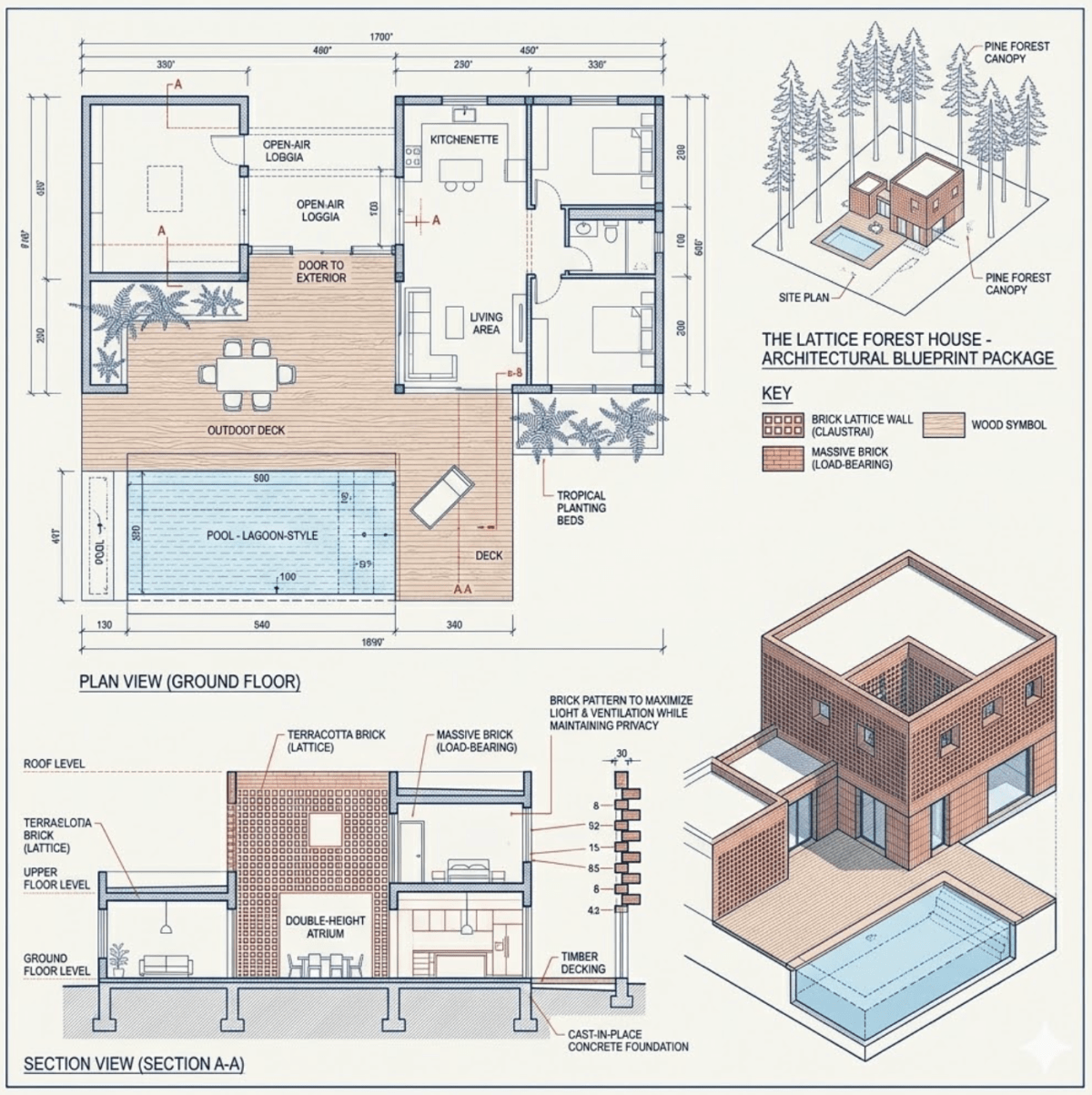
The ground floor layout is organised around a central reflecting pool and courtyard — a calm, contemplative space that gives every part of the building a view of water and sky. Around this core, the plan unfolds into a lobby and reception area, meeting rooms, office and lab spaces, and flexible common areas suited to the varied rhythms of innovation work. The relationship between indoor and outdoor is seamless throughout, with covered walkways and shaded thresholds ensuring the courtyard is usable across all seasons.

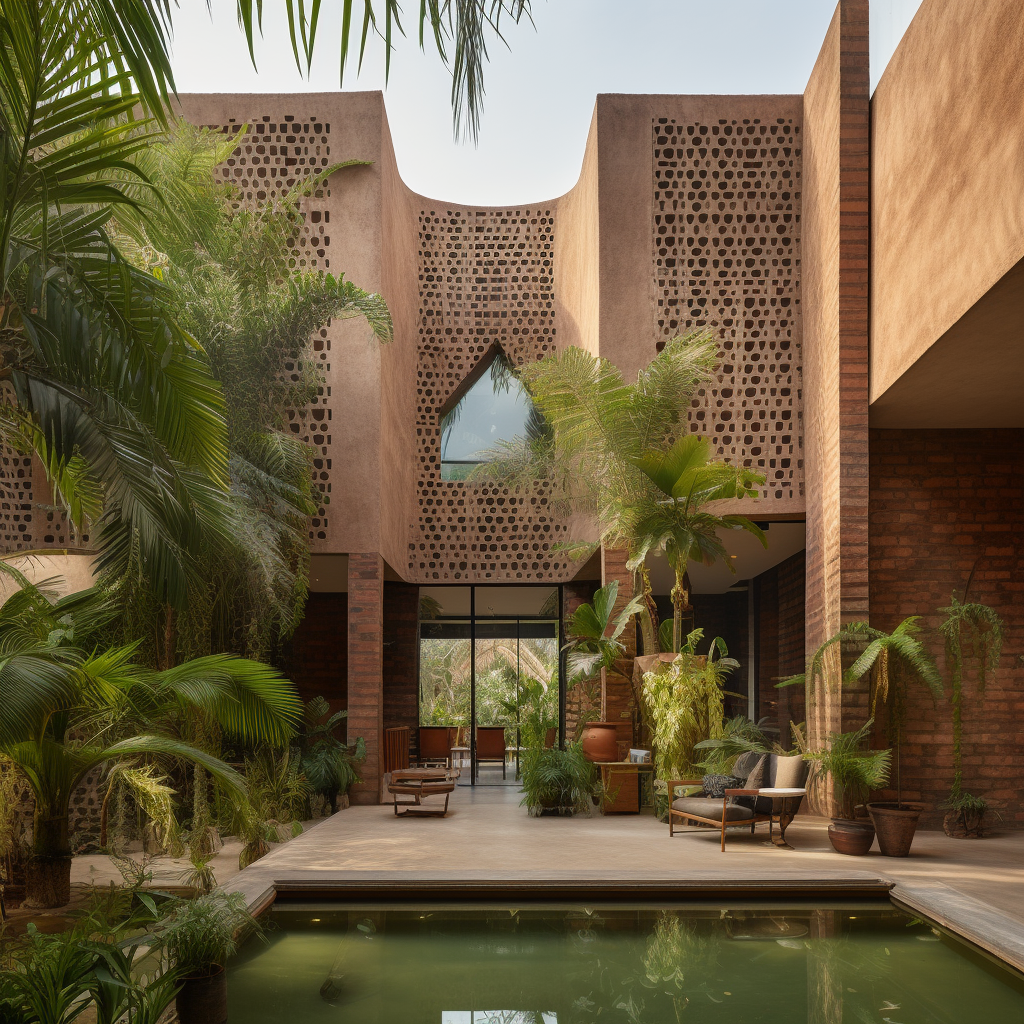
The facade uses an enlarged brick module in a patterned arrangement that references local craft traditions while performing a genuine environmental function — filtering direct sunlight, encouraging cross-ventilation, and giving the building a texture that changes through the day as the light moves across it. This is a building that invests in its setting and expects its setting to invest back.

Architectural Renders

Ocean-Side Cigar Lounge & Humidor — Dakar, Senegal

An intimate ocean-side cigar lounge and humidor in Dakar — a boutique hospitality project where patterned brick, a private pool, and careful climate control combine to create a singular sensory experience.

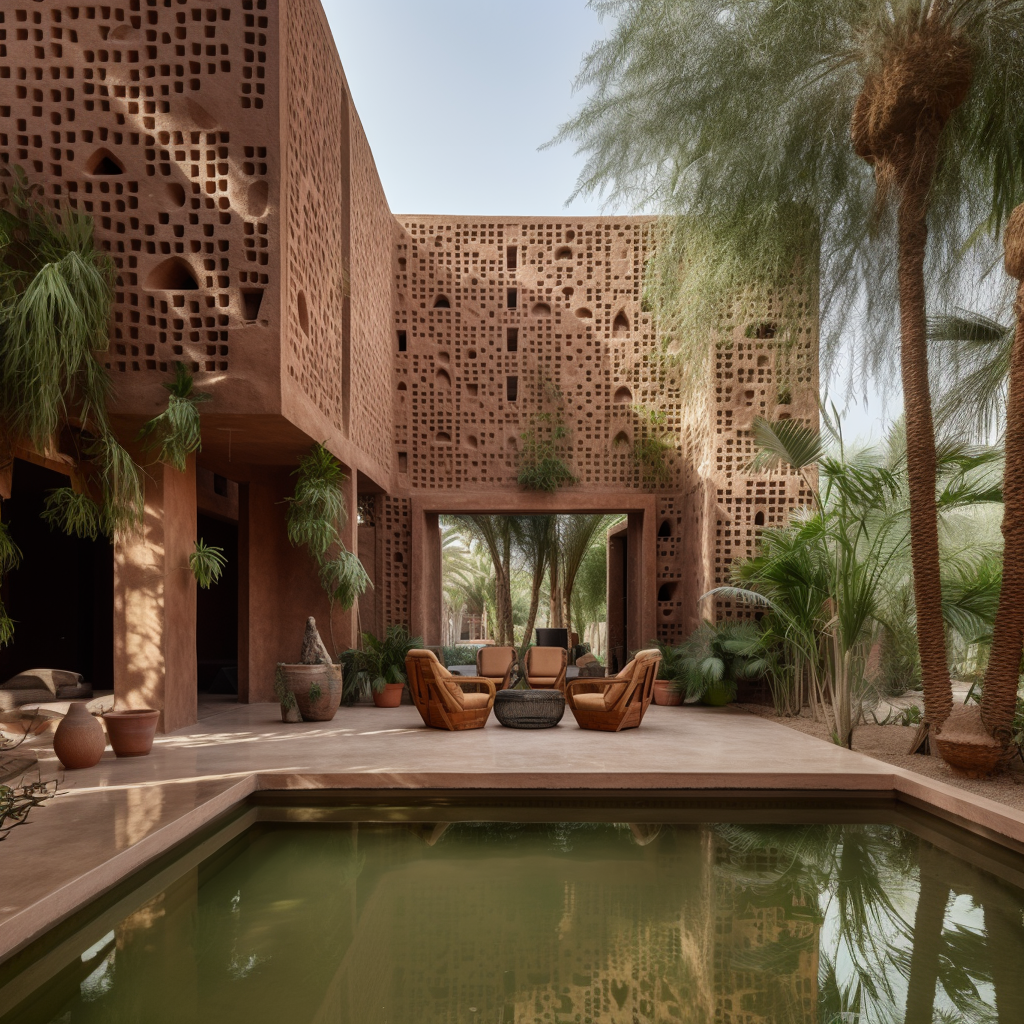
A cigar lounge makes particular demands on architecture: it requires precise humidity control, excellent natural ventilation, a sense of privacy and enclosure, and an atmosphere that rewards slow, unhurried occupation. This ocean-side lounge and humidor in Dakar, Senegal answers all of those demands with a design that is elegant, purposeful, and beautifully situated.

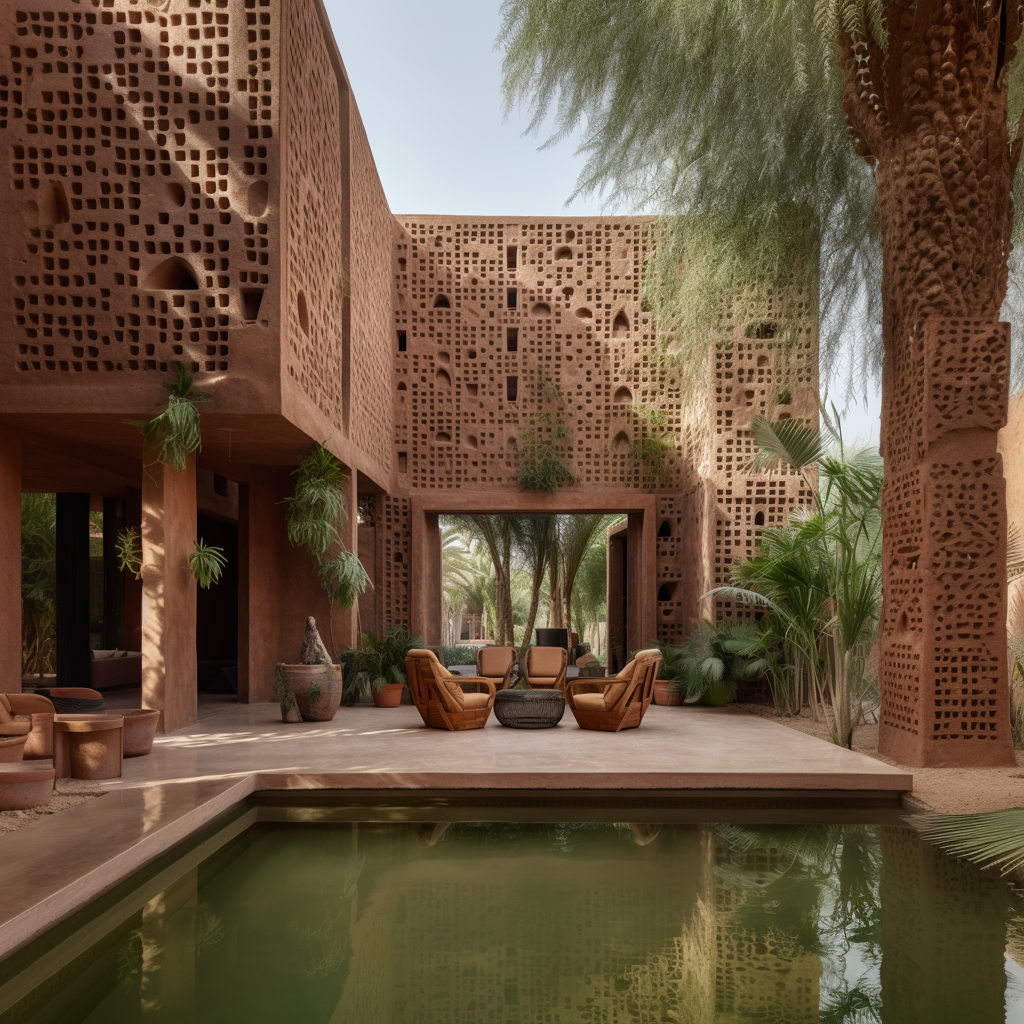
The building uses the same patterned brick facade system seen in the broader Dakar portfolio — a perforated masonry screen that filters ocean breezes while maintaining the internal humidity conditions essential for a quality humidor. The courtyard and pool extend outward from the main lounge volume, giving guests a private outdoor space that captures sea views and the Dakar coastal light without fully exposing them to the elements.

The ground floor site layout organises the program efficiently: the lounge and humidor occupy the primary volume, with service and storage tucked to the rear. Structural details document the stilt-to-floor beam connections and enlarged brick module assembly — the same robust system that ensures long-term performance in a coastal salt-air environment.

Architectural Renders

Eco-Modular Retreat — Dakar, Senegal

A modular eco-retreat in Dakar, Senegal, where patterned brick facades and palm-lined courtyards create a series of private units that feel both contemporary and deeply rooted in their West African context.

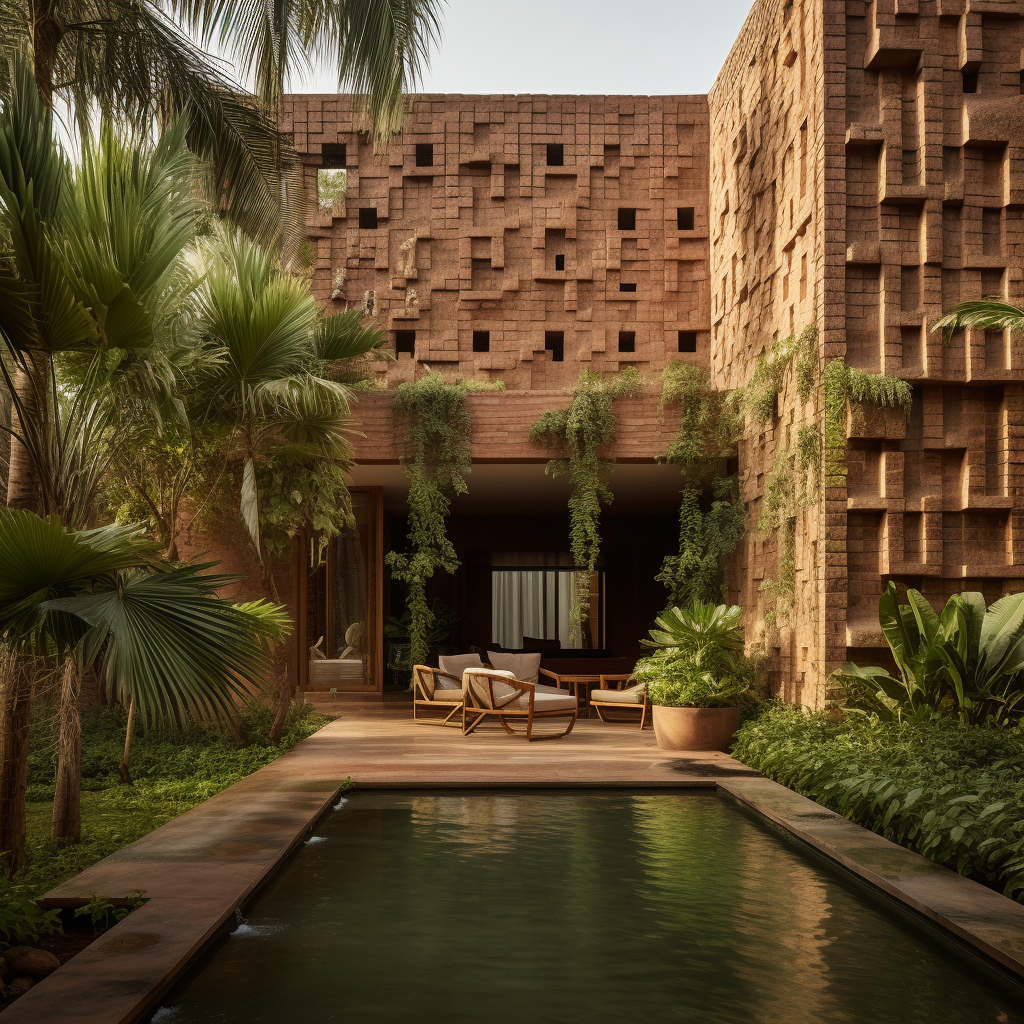
The Eco-Modular Retreat in Dakar, Senegal is designed around a deceptively simple idea: that a retreat should feel like a community, not a compound. Multiple modular units are arranged around a shared central courtyard that contains a pool, mature palm plantings, and integrated rock fill areas — creating a landscaped heart to the development that every unit relates to and benefits from.

Each unit’s facade uses a patterned brick module that references traditional West African screens and lattice work, allowing light and air to move through while maintaining visual privacy. The brick pattern is not merely decorative — it is structural and functional, calibrated at the module level to achieve the right balance of openness and enclosure. Wood composite panels appear at deck surfaces, doors, and louvered elements, adding warmth to what might otherwise be a purely masonry composition.

The west elevation reads as a long, layered horizontal — a series of slightly staggered bays unified by a consistent roofline. A section through the pool and courtyard reveals the relationship between the units and the shared outdoor space, showing how the buildings frame, shelter, and overlook the communal area without dominating it.

Architectural Renders

Beachside Bar & Pergola — Dakar, Senegal

A relaxed beachside bar and pergola on the coast of Dakar — a hospitality structure built for the open air, with a timber canopy, ocean views, and the kind of design that makes every visit feel unhurried.

Some buildings are about enclosure. This one is about the opposite. The beachside bar and pergola in Dakar, Senegal is designed to dissolve the boundary between shelter and open sky, using a timber pergola structure to provide shade without walls — letting the breeze, the light, and the proximity of the ocean do the rest of the work.

The overall site plan shows the bar set within a larger landscaped area, with outdoor seating zones arranged around a circular feature that anchors the space and draws people in. The bar itself is long and well-stocked, with a service bar running behind the counter and a service hatch system that allows the kitchen to supply the space efficiently without disrupting the flow of service.

The pergola construction is fully documented: posts rise from concrete pad footings, a beam-and-rafter system spans between them, and detailed joinery connections are shown at each intersection. Sliding menu panels, serving hatches, and blue-toned upholstered seating complete the picture — a well-resolved commercial hospitality design that would be as comfortable at opening as it is after a decade of use.

Architectural Renders

Beachside surf club render

AICAD Sustainable Building System

A research-forward sustainable building system developed by AICAD, integrating a diamond lattice structural grid, integrated data infrastructure, and modular construction logic into a coherent architectural framework.

The AICAD Sustainable Building System is not a building in the conventional sense — it is a platform. A structural and environmental system designed to be adapted, replicated, and built upon, bringing together advanced construction logic and integrated building technology in a single coherent framework.

At its heart is a diamond lattice wall and column system: a geometry that distributes structural loads efficiently while creating a distinctive visual texture at every scale. The lattice is expressed both in the primary structure and in the facade detailing, giving the building a consistent identity from street to interior. Foundations are a robust concrete base, scaled to suit the system’s modular grid.

What distinguishes this system is its integration of a building data bus: a distributed infrastructure layer that runs through the structure, connecting mechanical, electrical, and environmental monitoring systems in a way that supports smart building management from day one. Detailed construction drawings document the lattice connection details, column assembly, and data bus routing — a complete design and build package for a building type that takes sustainability seriously at a systems level.

Exhibition Pavilion — Urban Site

A compact urban exhibition pavilion built around a dramatic tunnel passage — layering perforated screens, wood slat walls, and textured brick pavers to create a space that rewards careful attention.

The best pavilions make a small site feel like a world of its own. This urban exhibition pavilion achieves that through a sequence of carefully layered thresholds: you approach across a paved forecourt, pass beneath a facade of perforated design screens, and enter through a tunnel passage whose compressed proportions make the interior feel expansive by contrast.

Inside, wood slat walls line the primary exhibition space, their rhythm creating a warm, directional backdrop for displayed work. The floor is concrete slab inlaid with red brick in a patterned bond, adding texture underfoot and reinforcing the sense that this is a considered, material-rich space. A service area runs along the rear of the plan, keeping operational functions discreet and out of sight.

The facade assembly is fully detailed: a structural frame sits behind an outer skin of perforated panels, with an insulation layer and wood block secondary screen between them — a wall that performs acoustically and thermally while doing significant architectural work on the street. Construction uses concrete slab foundations throughout, with structural framing that keeps the interior column-free for maximum flexibility.

Circular Earth Shelter with Rooftop Garden — Dakar, Senegal

An organic, circular-plan earth shelter in Dakar, Senegal, crowned with a productive green roof — a building that spirals inward like a living thing and gives back to the sky what it takes from the ground.

There are buildings that feel designed, and there are buildings that feel grown. This circular earth shelter in Dakar, Senegal, belongs to the second category. Its plan is radial and organic — a series of curved walls that spiral inward around a central core, creating rooms that flow into one another rather than sitting in a conventional grid.

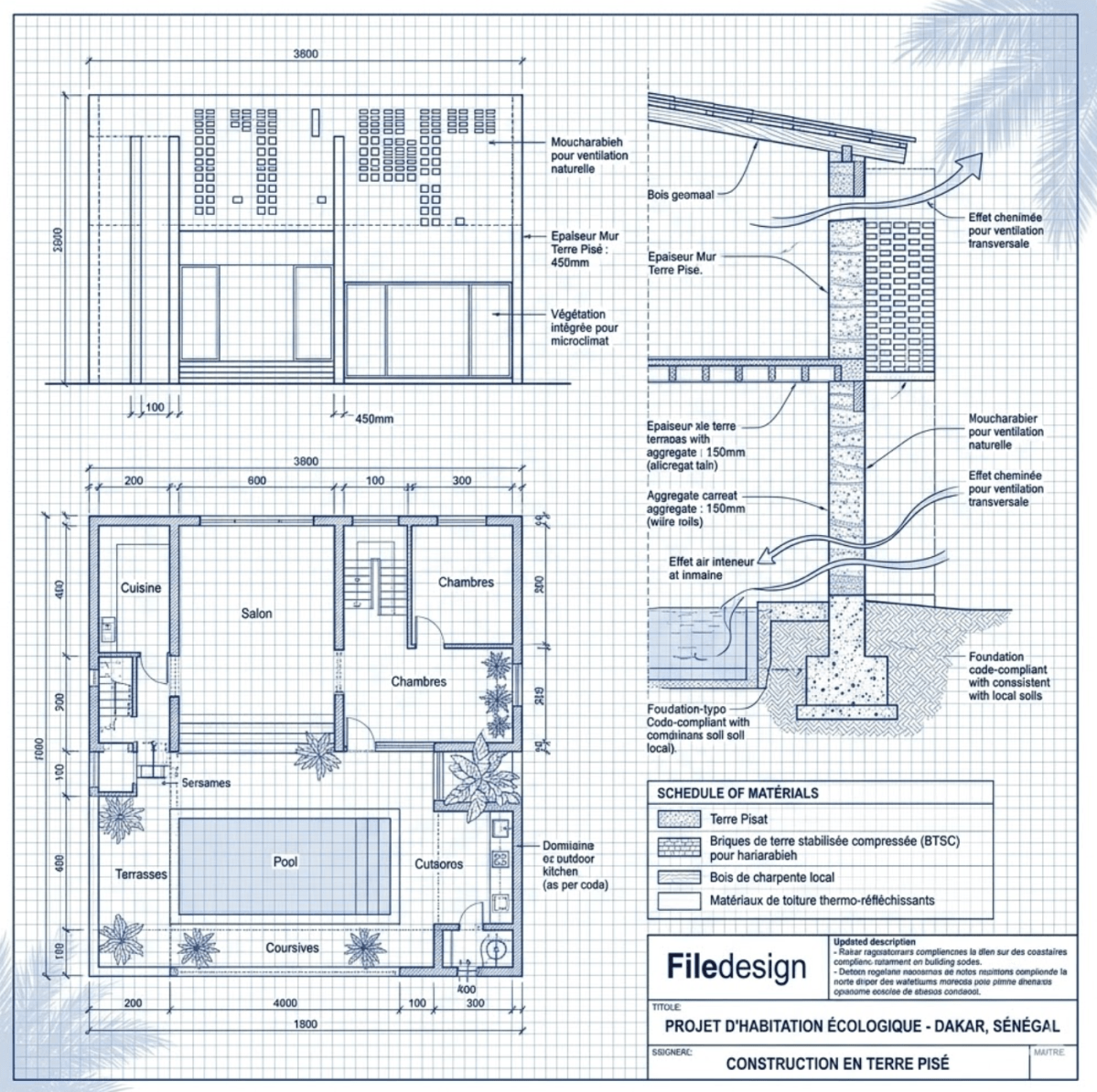
The exterior walls use a combination of adobe clay, earth plaster, and rammed earth, chosen for their thermal performance, local availability, and the warm, textured surfaces they produce. The building is single-storey at its perimeter and rises toward its centre, culminating in a rooftop green roof assembly that supports planting, manages rainwater, and softens the building’s presence in the landscape.

Inside, the circular layout gives every room a curved wall — making spaces feel sheltered and particular rather than generic. The green roof assembly is fully detailed in the drawings, including its drainage layer, growing medium, and planting specification. This is a building that takes from the earth in its materials and gives back to it through its rooftop — a small, complete ecological cycle in built form.

Architectural Renders

Compact Timber Frame Cabin with Viewing Deck

A carefully crafted timber frame cabin with outbuilding and elevated viewing deck — a compact retreat where every square metre earns its place.

Small does not mean simple. This compact cabin proves that a modest footprint, when thoughtfully designed, can deliver comfort, character, and a genuine connection to its surroundings. The primary structure uses exposed timber framing — a warm, tactile system that gives the interior a sense of craft and honesty — with elevations that open generously to the views on three sides.

The ground floor plan organises all essential living functions efficiently: a main living area, kitchen, and bathroom within a compact form, with a covered outbuilding adjacent for storage or utility use. A separate viewing deck extends from the site, elevated to capture long views across the landscape — a simple addition that transforms the property’s relationship to its setting.

The longitudinal section reveals how the timber frame works structurally: paired rafters, a clear ridge beam, and carefully detailed wall-to-foundation connections that tie the building together without excess. This is architecture distilled to its essentials — a shelter that puts its occupants exactly where they want to be.

Innovation Center — Schematic Design

A large-scale innovation center designed to bring together open offices, research labs, meeting spaces, and a recital auditorium under one dynamic roof — built to US code with a striking multi-volume facade.

This schematic design for an innovation center represents a significant civic and institutional ambition: a building that can house the full range of activities that drive collaborative, creative work — from focused individual research to large-group performance and public engagement.

The ground floor plan is carefully zoned into distinct but connected areas: a welcoming lobby and reception, open office zones, enclosed meeting rooms, laboratory spaces, lab office suites, and a standout auditorium with an inclined floor, designed for lectures, presentations, or recitals. A central courtyard threads through the plan, bringing natural light deep into the building and providing an outdoor gathering space at the heart of the complex.

The facade is composed of four distinct volumes, each clad in a different material — concrete panels, glass curtain wall, triangular interior elements, and metal roofing — giving the building a varied, expressive profile. Inside, perforated acoustic panels line the auditorium and key circulation zones, ensuring that the building sounds as good as it looks. A truss roof system spans the larger spaces, keeping the interiors column-free and flexible. US building code compliant throughout.

Architectural Renders