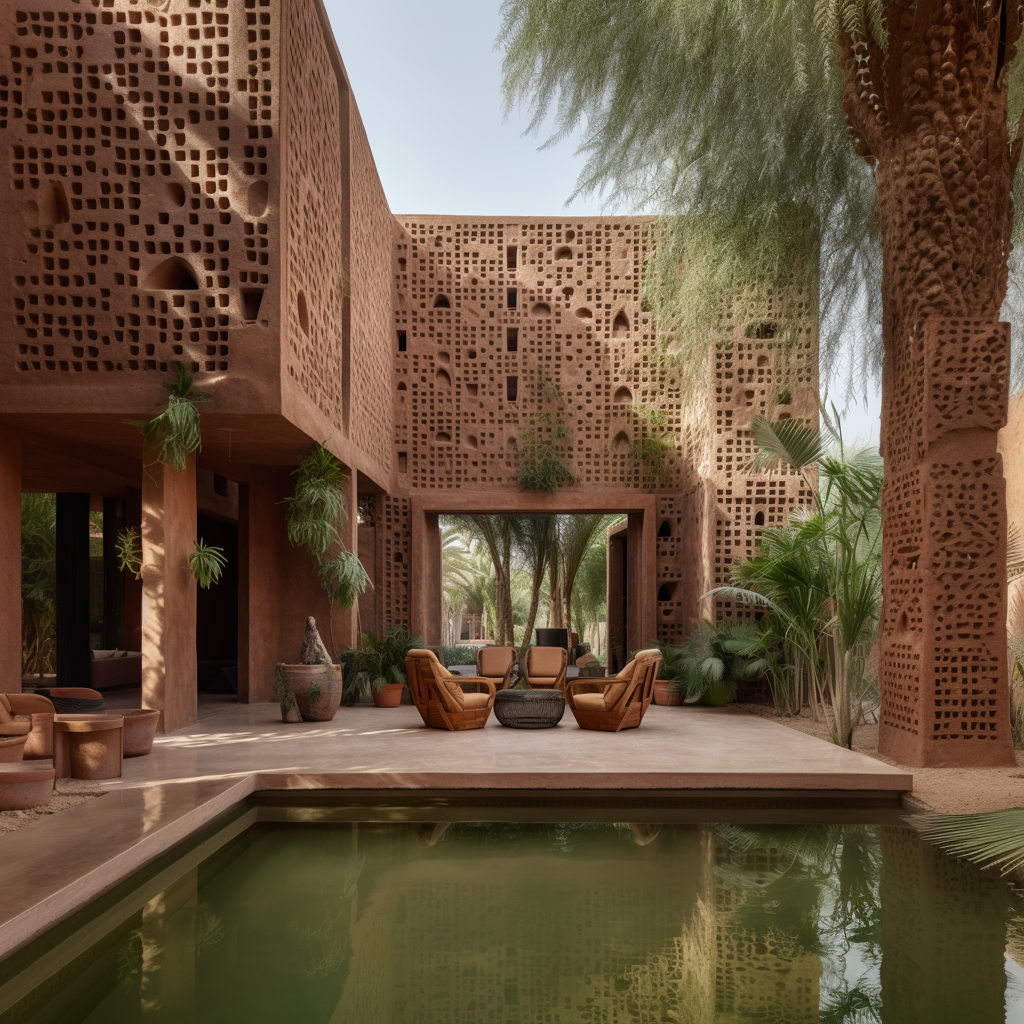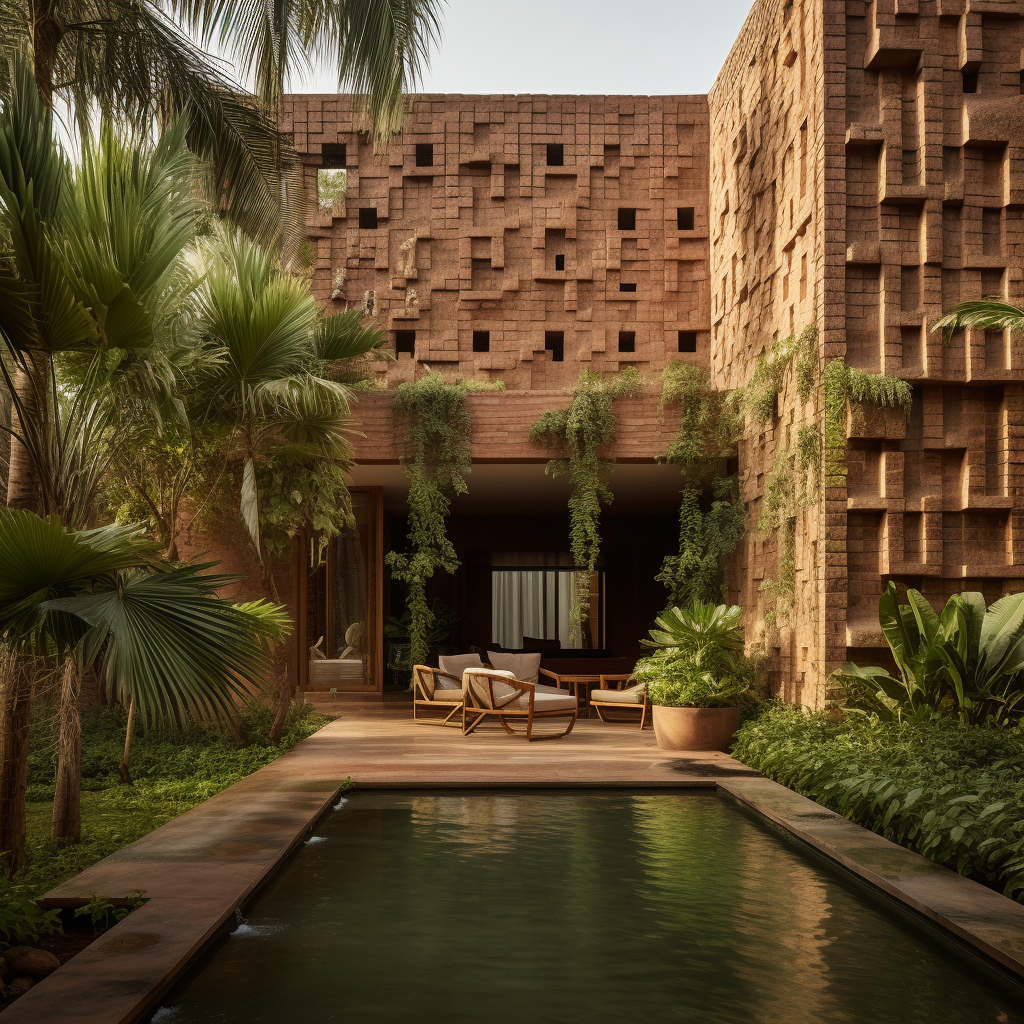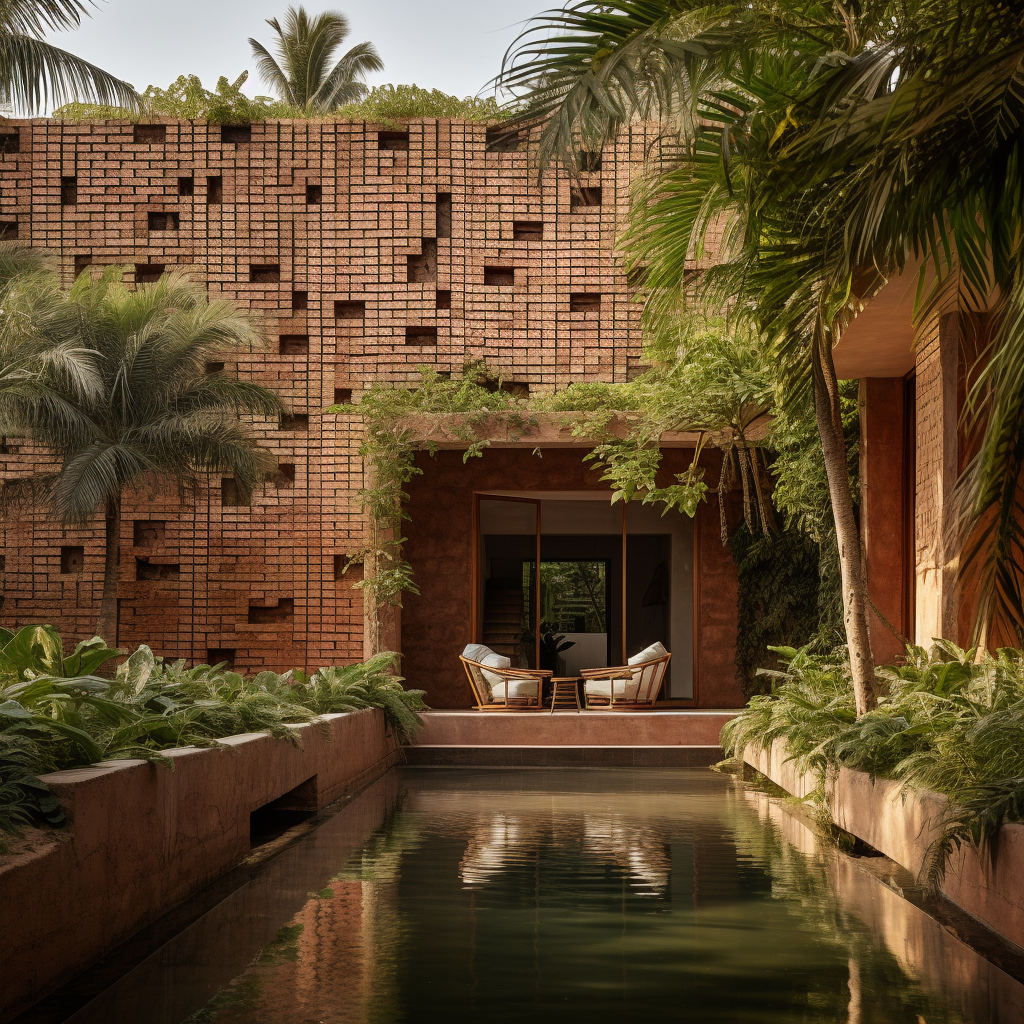
AICAD Sustainable Building System

A research-forward sustainable building system developed by AICAD, integrating a diamond lattice structural grid, integrated data infrastructure, and modular construction logic into a coherent architectural framework.

The AICAD Sustainable Building System is not a building in the conventional sense — it is a platform. A structural and environmental system designed to be adapted, replicated, and built upon, bringing together advanced construction logic and integrated building technology in a single coherent framework.

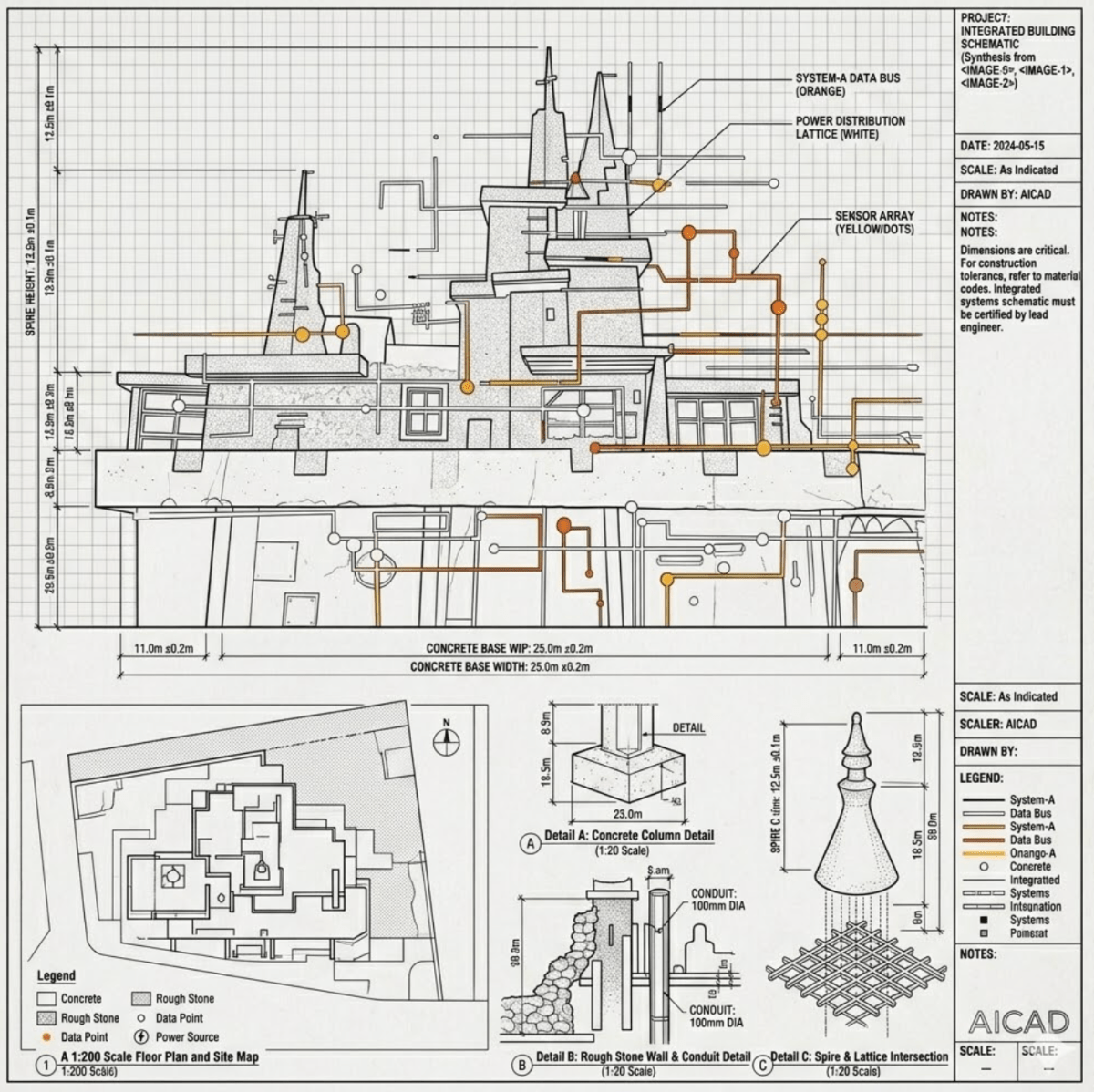
At its heart is a diamond lattice wall and column system: a geometry that distributes structural loads efficiently while creating a distinctive visual texture at every scale. The lattice is expressed both in the primary structure and in the facade detailing, giving the building a consistent identity from street to interior. Foundations are a robust concrete base, scaled to suit the system’s modular grid.

What distinguishes this system is its integration of a building data bus: a distributed infrastructure layer that runs through the structure, connecting mechanical, electrical, and environmental monitoring systems in a way that supports smart building management from day one. Detailed construction drawings document the lattice connection details, column assembly, and data bus routing — a complete design and build package for a building type that takes sustainability seriously at a systems level.
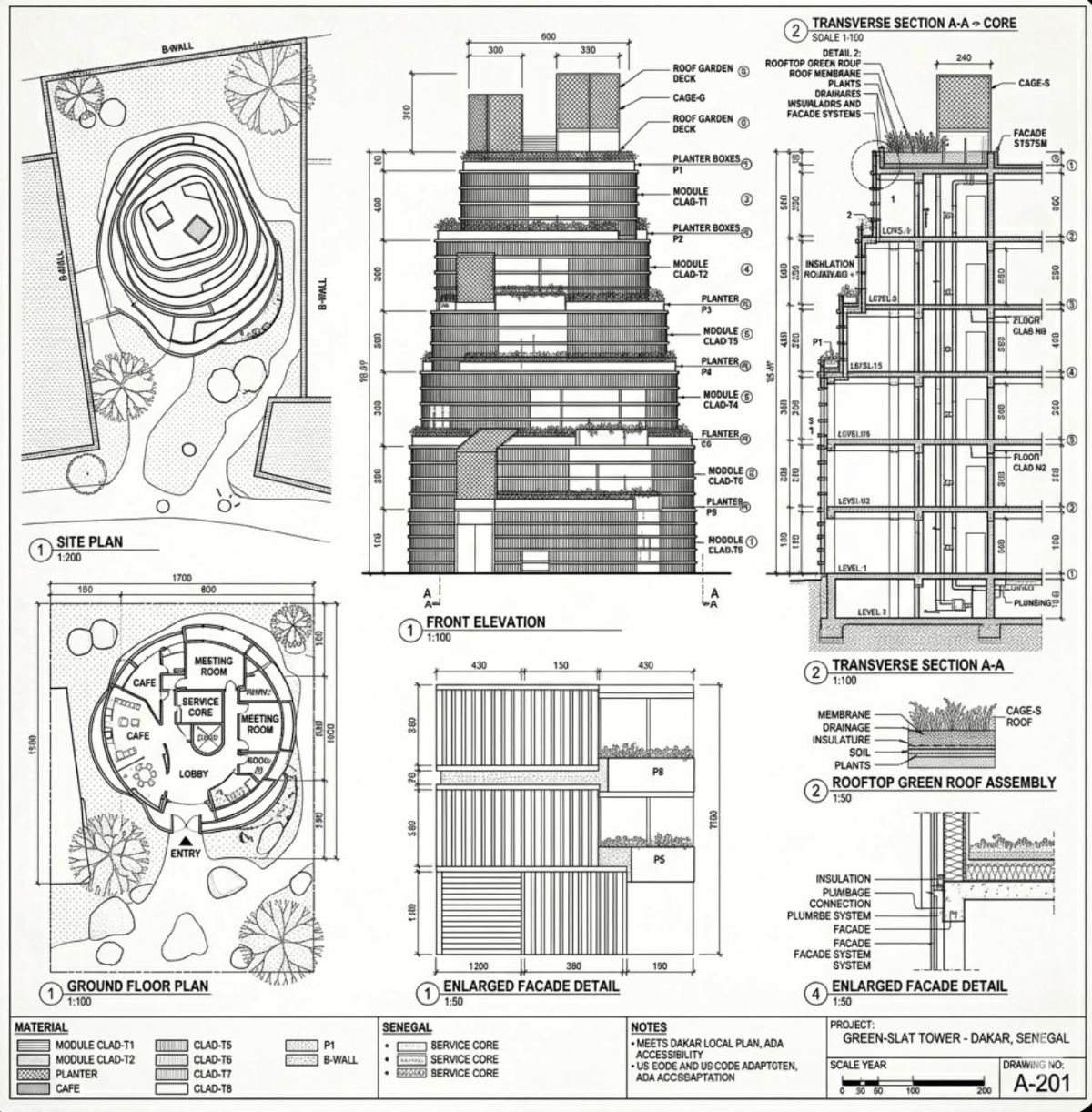
Circular Earth Shelter with Rooftop Garden — Dakar, Senegal

An organic, circular-plan earth shelter in Dakar, Senegal, crowned with a productive green roof — a building that spirals inward like a living thing and gives back to the sky what it takes from the ground.

There are buildings that feel designed, and there are buildings that feel grown. This circular earth shelter in Dakar, Senegal, belongs to the second category. Its plan is radial and organic — a series of curved walls that spiral inward around a central core, creating rooms that flow into one another rather than sitting in a conventional grid.

The exterior walls use a combination of adobe clay, earth plaster, and rammed earth, chosen for their thermal performance, local availability, and the warm, textured surfaces they produce. The building is single-storey at its perimeter and rises toward its centre, culminating in a rooftop green roof assembly that supports planting, manages rainwater, and softens the building’s presence in the landscape.

Inside, the circular layout gives every room a curved wall — making spaces feel sheltered and particular rather than generic. The green roof assembly is fully detailed in the drawings, including its drainage layer, growing medium, and planting specification. This is a building that takes from the earth in its materials and gives back to it through its rooftop — a small, complete ecological cycle in built form.

Architectural Renders

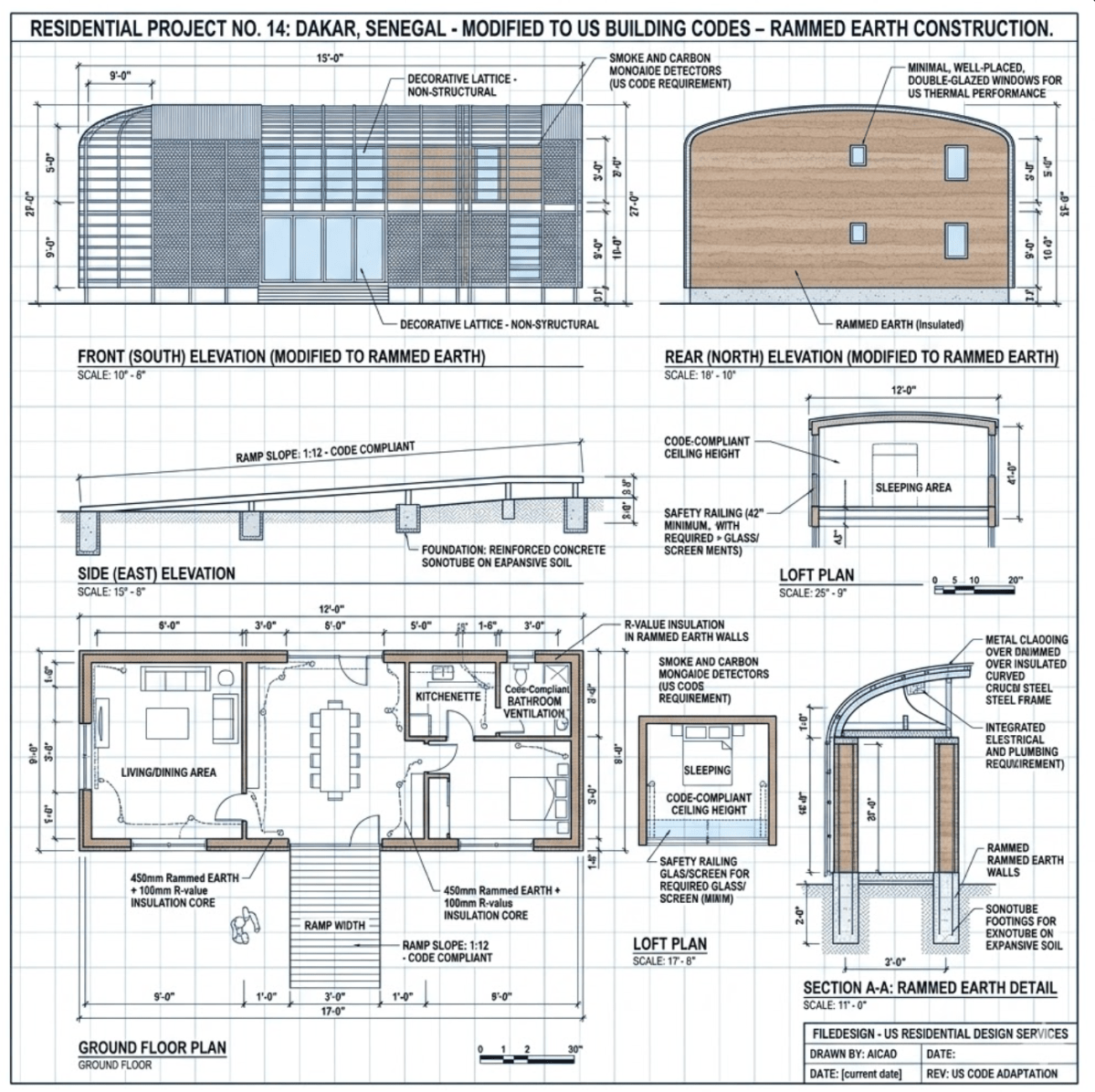
Residential Project No. 14 — Rammed Earth, Dakar, Senegal

A rammed earth residential design for Dakar, Senegal, adapted to meet US building code requirements — proving that vernacular construction techniques can hold their own within modern regulatory frameworks.

Residential Project No. 14 is a thoughtful exercise in bridging two worlds: the ancient tradition of rammed earth construction and the requirements of contemporary US building codes. Sited in Dakar, Senegal, the design demonstrates that these two frameworks are not at odds — they simply require careful, deliberate detailing.

The ground floor accommodates a main living and conference area alongside kitchen and bathroom facilities, arranged in a clear, functional plan. A loft level rises above, offering a private sleeping zone that takes advantage of the building’s generous ceiling height. Roof slope and drainage are code-compliant throughout.

Construction detailing addresses rammed earth-specific concerns: moisture protection at the base, insulation integration within the wall section, and structural reinforcement where required by code. The result is a home that reads as genuinely local — warm, textured, and climatically responsive — while meeting the rigorous standards expected of any contemporary building project.

Architectural Renders

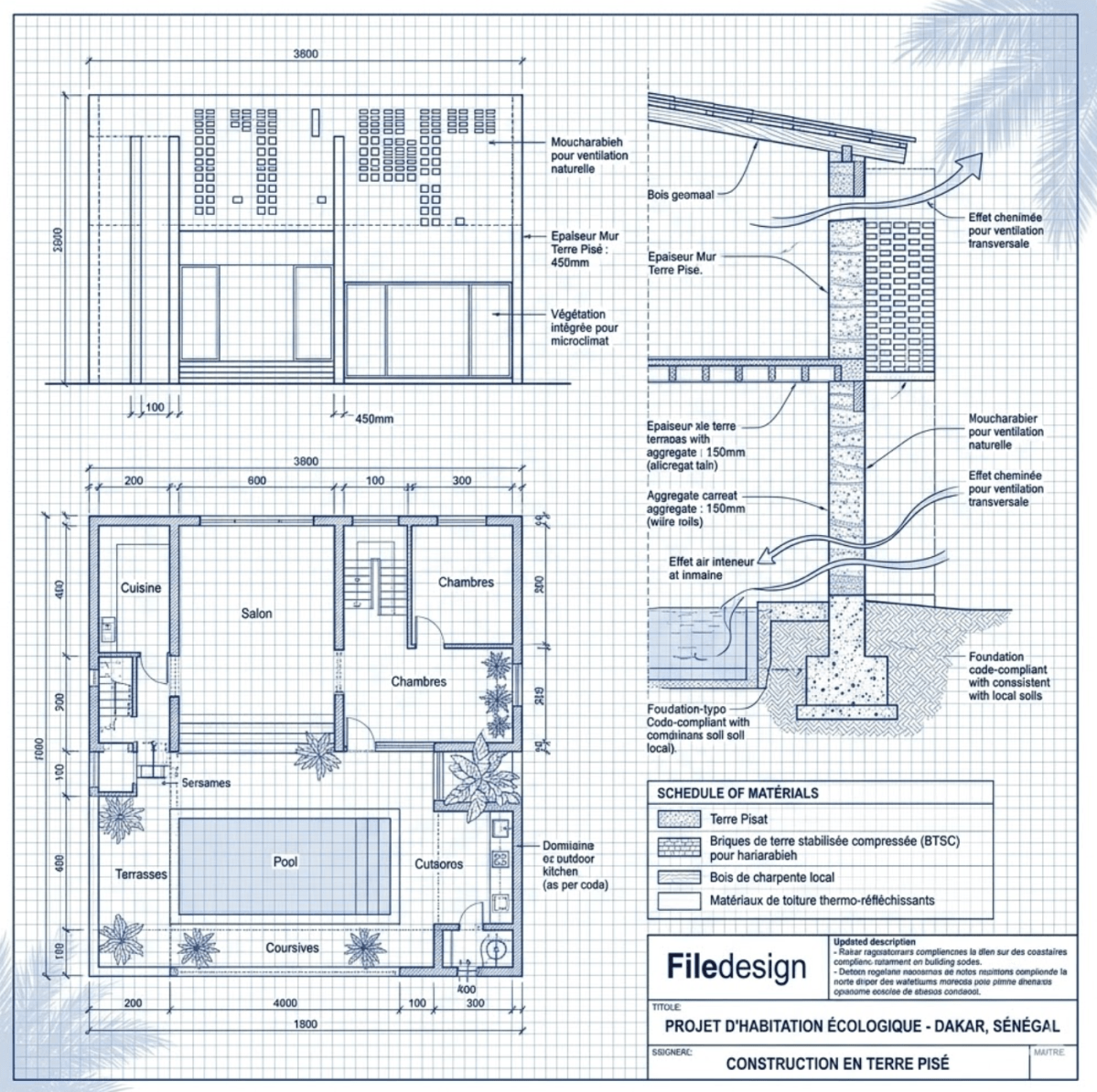
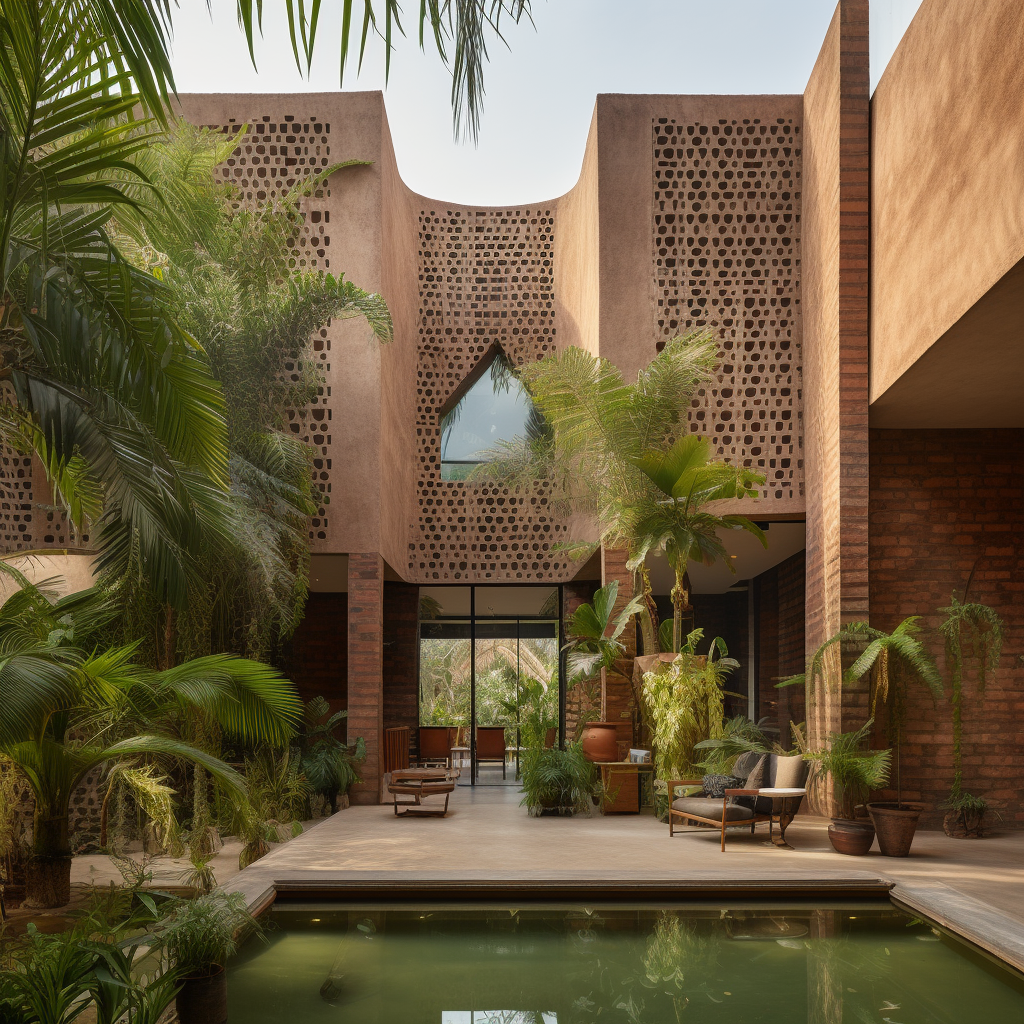
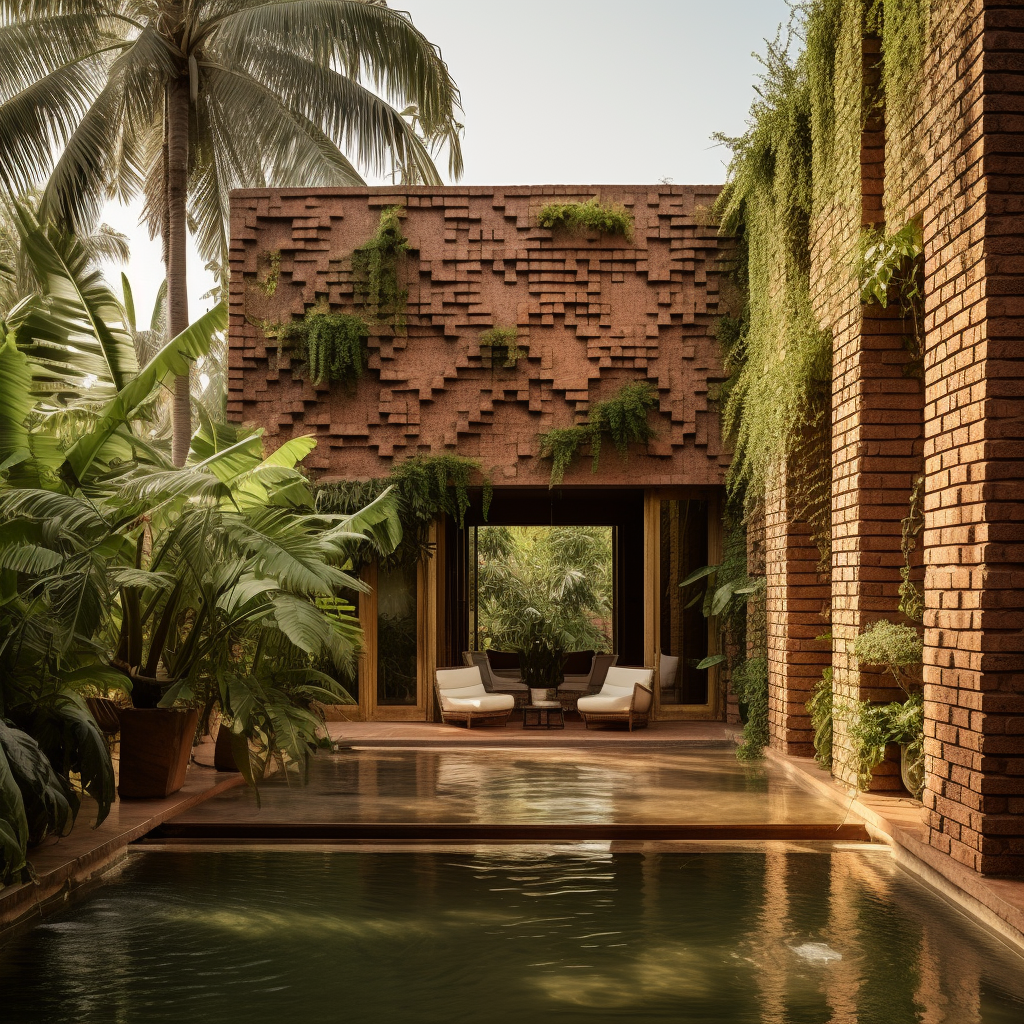
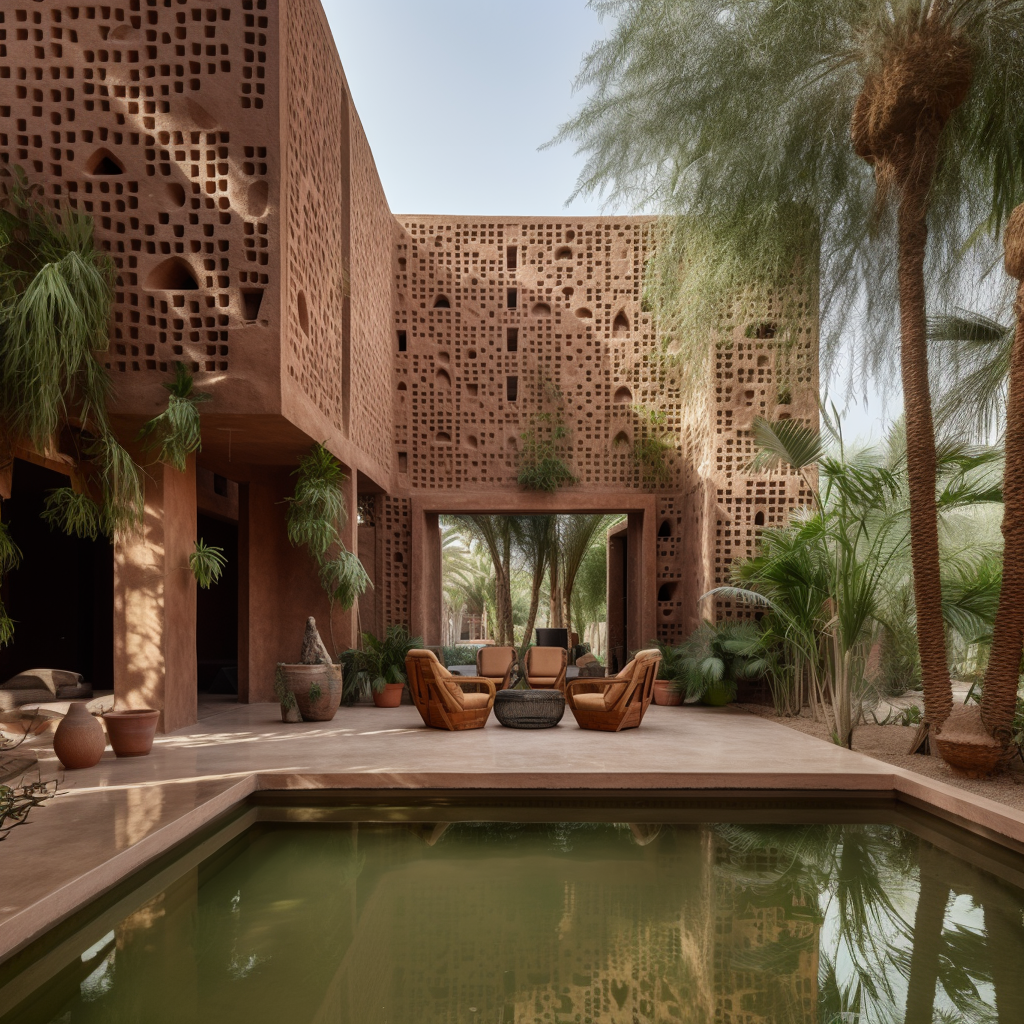
Ecological Housing Project — Dakar, Senegal

A single-story ecological home in Dakar, Senegal, built using traditional rammed earth (terre pisé) construction — blending climate-sensitive design with the textures and warmth of natural materials.

Rooted in the landscape of Dakar, Senegal, this ecological housing project embraces one of the world’s oldest building traditions: terre pisé, or rammed earth construction. The design pairs the thermal mass and natural character of compacted earth walls with a thoughtfully organised single-story floor plan, creating a home that stays cool in the heat without relying on mechanical systems.

The layout centres around a generous living room (salon) and private bedroom (chambre), with a kitchen and utility spaces arranged for ease of daily life. Covered terraces extend the living areas outdoors, blurring the line between interior comfort and the open air. A pool area anchors the rear of the site, creating a private retreat shaded by the building’s own form.

Structurally, the walls combine stabilised rammed earth panels with thermal insulation detailing, ensuring both durability and energy performance. The project demonstrates that traditional materials — when applied with care and technical precision — can produce homes that are beautiful, practical, and deeply connected to their place.

Architectural Renders