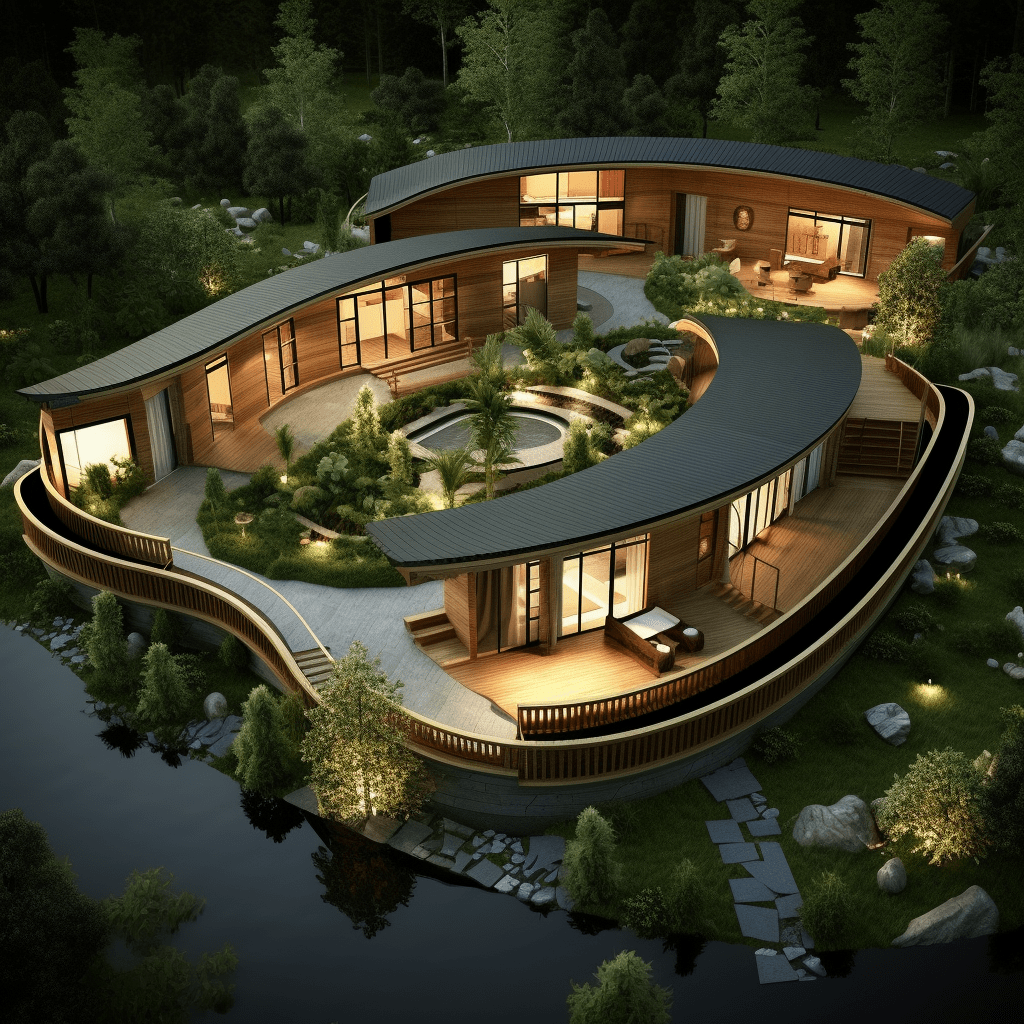
The Curve Within the Rectangle
The 12×30 metre footprint is a common constraint in urban and peri-urban residential design — a narrow lot that forces efficiency and demands that every square metre earn its place. This study introduces a curved plan geometry within that envelope, asking what happens when the organizing logic of the house is not the right angle but the arc.
The curve does several things simultaneously: it creates a dynamic façade that catches light differently across its surface, it generates interior rooms of varying widths that resist the cellular monotony of the rectangular plan, and it introduces a sense of movement — a sweeping gesture that draws the eye and the body through space.
Compact and Considered
At 12 metres wide, the plan remains buildable on a standard urban lot without requiring a corner site or unusual setback arrangements. The curved wall is expressed on the street-facing façade, giving the house a distinctive presence on the block while the rear elevation remains orthogonal for ease of construction and utility access.
These AI renders explore the visual and spatial character of the curved compact house — a study in how a simple geometric deviation from the norm can produce architecture of genuine distinction within ordinary constraints.
 SPANTONE