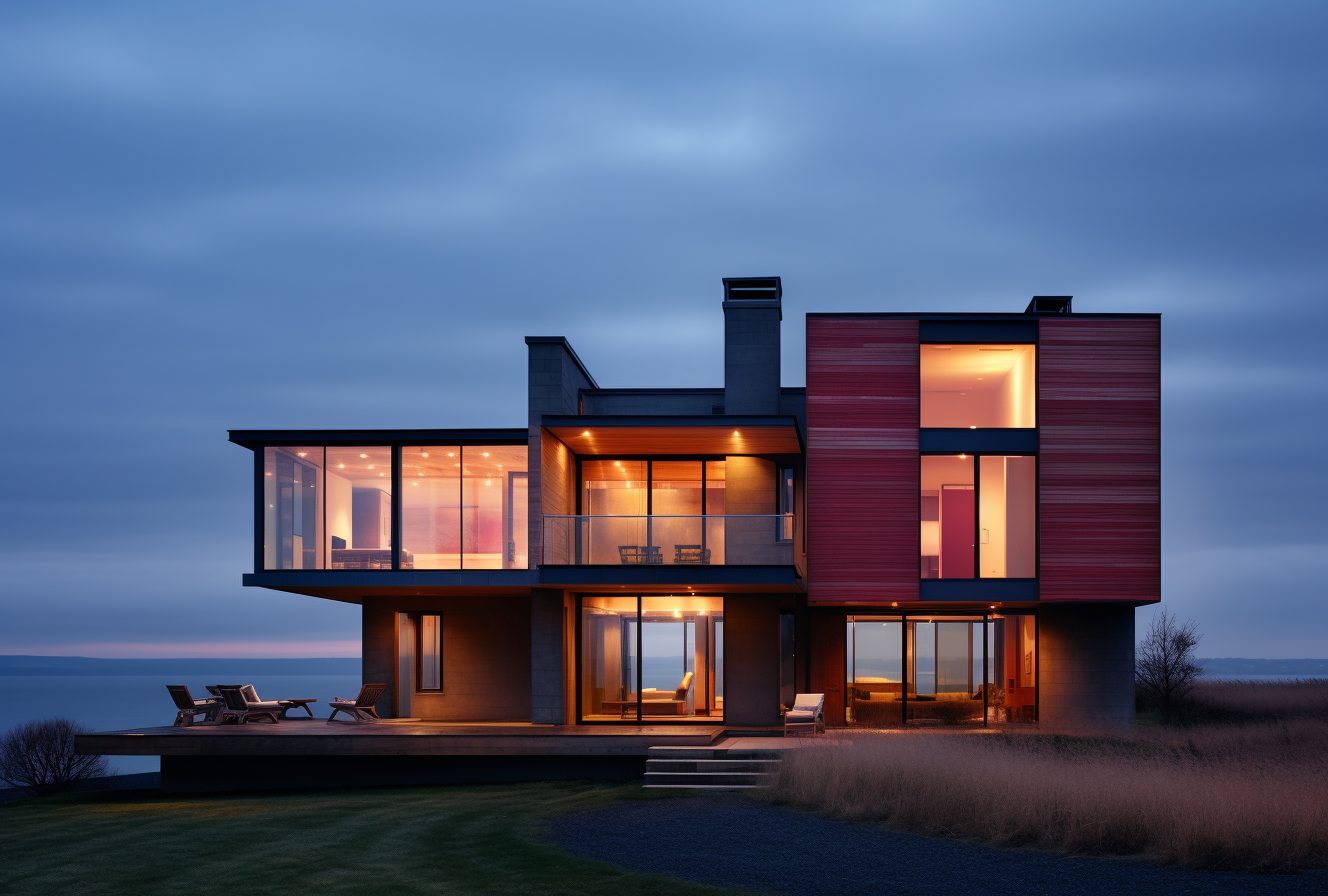
Exhibition Pavilion — Urban Site

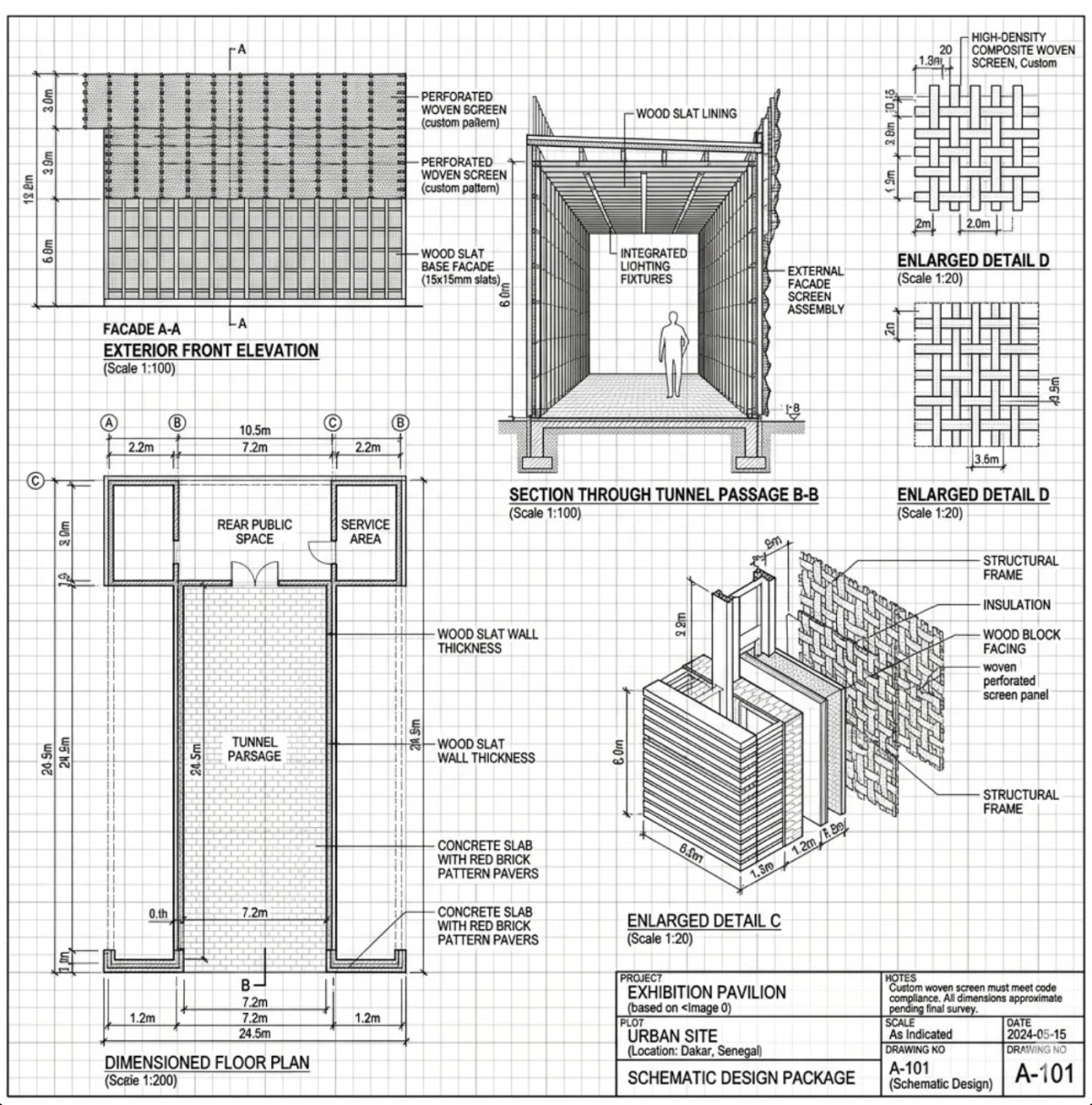
A compact urban exhibition pavilion built around a dramatic tunnel passage — layering perforated screens, wood slat walls, and textured brick pavers to create a space that rewards careful attention.

The best pavilions make a small site feel like a world of its own. This urban exhibition pavilion achieves that through a sequence of carefully layered thresholds: you approach across a paved forecourt, pass beneath a facade of perforated design screens, and enter through a tunnel passage whose compressed proportions make the interior feel expansive by contrast.

Inside, wood slat walls line the primary exhibition space, their rhythm creating a warm, directional backdrop for displayed work. The floor is concrete slab inlaid with red brick in a patterned bond, adding texture underfoot and reinforcing the sense that this is a considered, material-rich space. A service area runs along the rear of the plan, keeping operational functions discreet and out of sight.

The facade assembly is fully detailed: a structural frame sits behind an outer skin of perforated panels, with an insulation layer and wood block secondary screen between them — a wall that performs acoustically and thermally while doing significant architectural work on the street. Construction uses concrete slab foundations throughout, with structural framing that keeps the interior column-free for maximum flexibility.
Innovation Center — Schematic Design

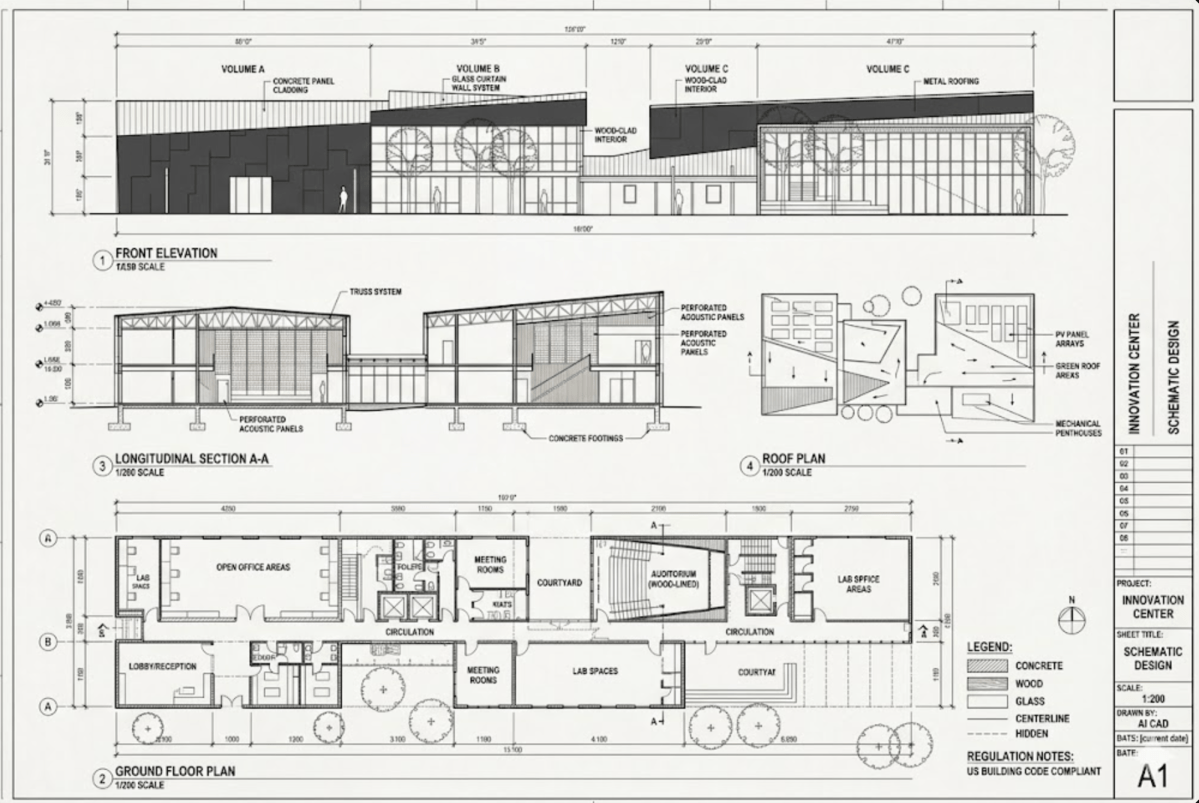
A large-scale innovation center designed to bring together open offices, research labs, meeting spaces, and a recital auditorium under one dynamic roof — built to US code with a striking multi-volume facade.

This schematic design for an innovation center represents a significant civic and institutional ambition: a building that can house the full range of activities that drive collaborative, creative work — from focused individual research to large-group performance and public engagement.

The ground floor plan is carefully zoned into distinct but connected areas: a welcoming lobby and reception, open office zones, enclosed meeting rooms, laboratory spaces, lab office suites, and a standout auditorium with an inclined floor, designed for lectures, presentations, or recitals. A central courtyard threads through the plan, bringing natural light deep into the building and providing an outdoor gathering space at the heart of the complex.

The facade is composed of four distinct volumes, each clad in a different material — concrete panels, glass curtain wall, triangular interior elements, and metal roofing — giving the building a varied, expressive profile. Inside, perforated acoustic panels line the auditorium and key circulation zones, ensuring that the building sounds as good as it looks. A truss roof system spans the larger spaces, keeping the interiors column-free and flexible. US building code compliant throughout.

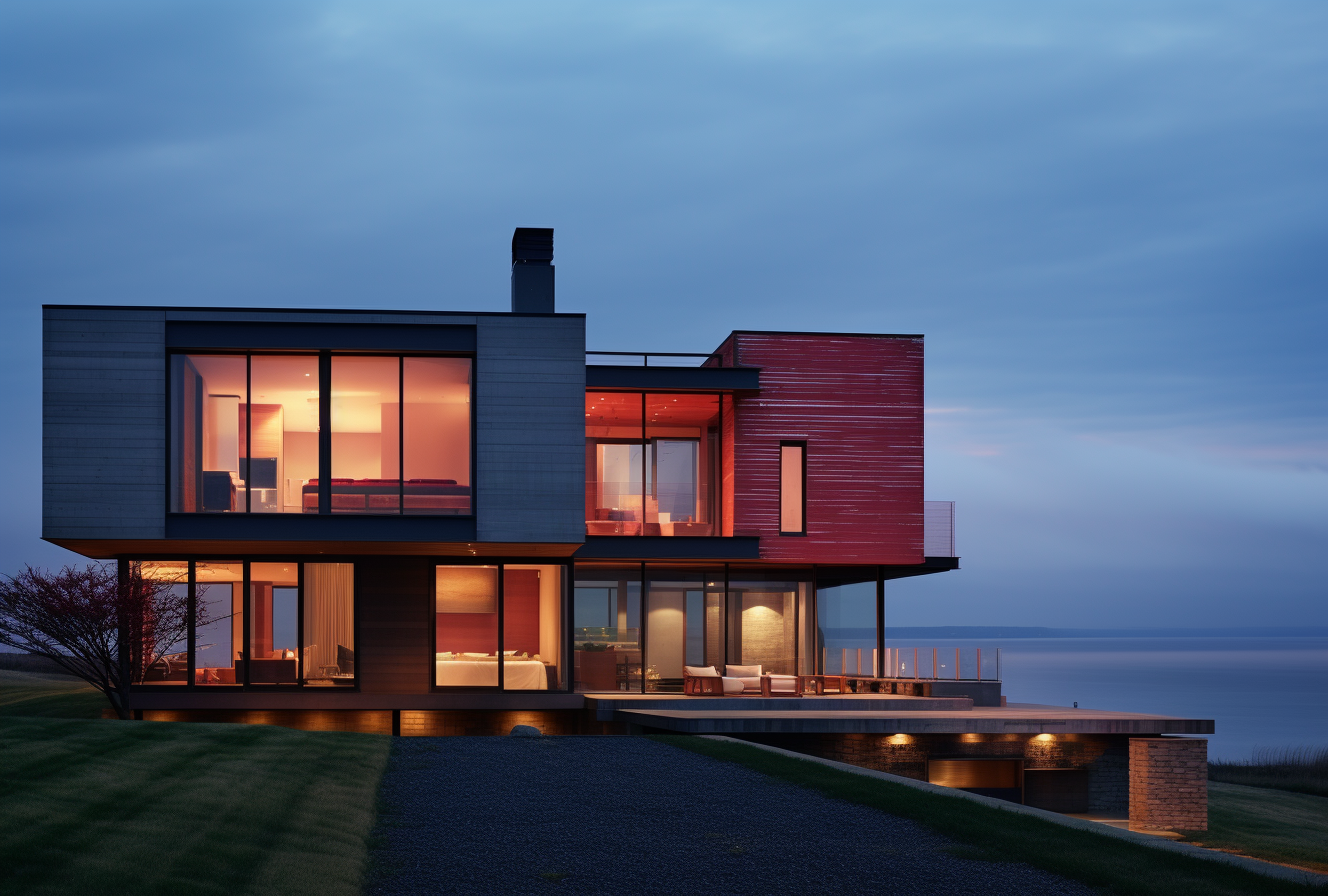
Architectural Renders